

As a cutting wheel supplier deeply entrenched in the industry, I often encounter a crucial question from customers: Can a high - speed cutting wheel be used on all types of grinders? This question is of paramount importance as it touches on the safety, efficiency, and overall performance of cutting operations.
Understanding High - Speed Cutting Wheels
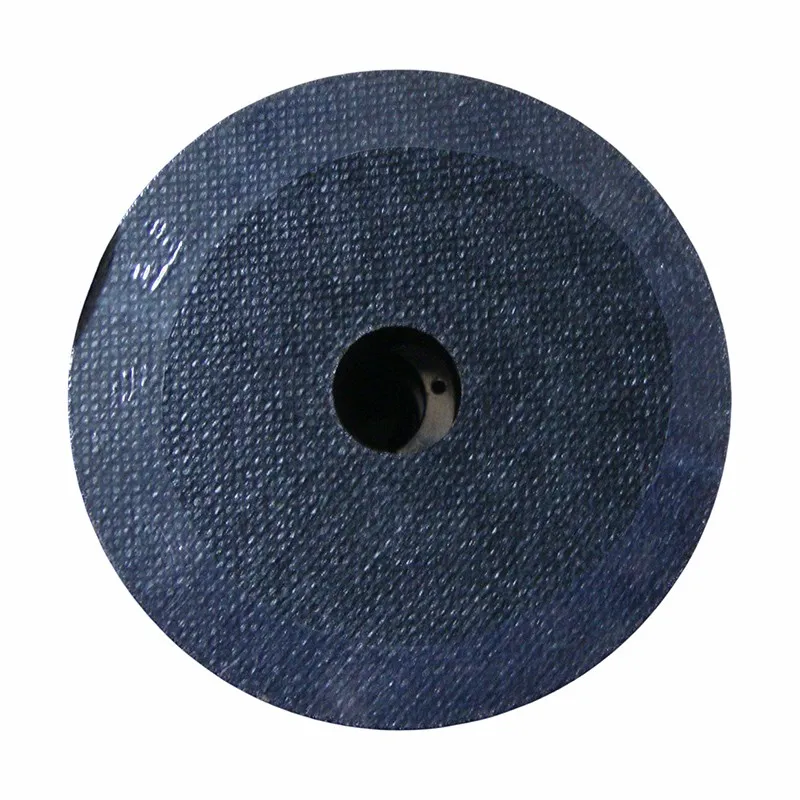
High - speed cutting wheels are engineered to cut through various materials with precision and speed. They are typically made from abrasive grains bonded together by a matrix material. The abrasive grains, such as aluminum oxide or silicon carbide, provide the cutting action, while the bond holds the grains in place during operation.
These cutting wheels are designed to rotate at high speeds, which allows them to quickly penetrate and slice through materials. The speed at which they operate is often much higher than that of standard cutting tools, enabling efficient and rapid cutting processes. However, this high - speed operation also means that they produce a significant amount of heat and force, which must be carefully managed.
Different Types of Grinders
Before delving into the compatibility of high - speed cutting wheels with various grinders, it is essential to understand the different types of grinders available in the market.
Angle Grinders
Angle grinders are one of the most commonly used types of grinders. They are versatile tools that can be used for a wide range of tasks, including cutting, grinding, and polishing. Angle grinders come in different sizes and power ratings, and are typically handheld, making them easy to maneuver in various work environments.
Bench Grinders
Bench grinders are stationary tools that are mounted on a workbench. They are mainly used for grinding and sharpening tools. The grinding wheels on bench grinders are usually larger and rotate at a relatively lower speed compared to angle grinders.
Die Grinders
Die grinders are small, handheld power tools that are used for precise grinding, shaping, and cutting operations. They are often used in applications where access to tight spaces is required, such as in the automotive and aerospace industries.
Compatibility Analysis
Compatibility with Angle Grinders
High - speed cutting wheels are generally well - suited for use with angle grinders. In fact, they are specifically designed to work in conjunction with these high - powered tools. Angle grinders can provide the necessary rotational speed and torque to drive the cutting wheel effectively.
However, there are certain factors that need to be considered. The size and thickness of the cutting wheel must be compatible with the specifications of the angle grinder. Using a wheel that is too large or too thick can put excessive strain on the grinder's motor, leading to overheating and potential damage. On the other hand, using a wheel that is too small may result in inefficient cutting and increased wear on the wheel.
Compatibility with Bench Grinders
Using a high - speed cutting wheel on a bench grinder is not recommended in most cases. Bench grinders are primarily designed for grinding and sharpening, and their rotational speed is usually much lower than that required for high - speed cutting wheels.
When a high - speed cutting wheel is used on a bench grinder, it may not reach its optimal cutting speed, which can lead to poor cutting performance. Additionally, the lower speed may cause the wheel to bind or stall during the cutting process, increasing the risk of kickback and other safety hazards.
Compatibility with Die Grinders
Die grinders can sometimes be used with high - speed cutting wheels, but it depends on the specific model and its power output. Some die grinders have sufficient power and rotational speed to drive a small - diameter high - speed cutting wheel.
However, due to the small size and delicate nature of die grinders, it is crucial to select the appropriate cutting wheel. Using a wheel that is too large or requires too much power can overload the die grinder and cause it to malfunction.
Safety Considerations
Regardless of the type of grinder, safety should always be the top priority when using high - speed cutting wheels.
Wheel Selection
Selecting the right cutting wheel for the specific grinder and application is essential. The wheel should be rated for the maximum speed of the grinder and be suitable for the material being cut. Cutting Wheels for Stainless Steel and Industrial Cutting Wheels for Metal are examples of specialized cutting wheels that are designed for specific materials.
Proper Installation
The cutting wheel must be installed correctly on the grinder. This includes ensuring that the wheel is centered, tightened securely, and that the flanges are the appropriate size. Incorrect installation can lead to uneven wear, vibration, and even wheel breakage during operation.

Personal Protective Equipment (PPE)
Operators should always wear appropriate PPE, such as safety glasses, face shields, gloves, and hearing protection. High - speed cutting operations generate sparks, debris, and noise, which can pose significant risks to the operator's safety.
Conclusion
In conclusion, a high - speed cutting wheel cannot be used on all types of grinders. While they are generally compatible with angle grinders, they are not suitable for bench grinders in most cases, and their compatibility with die grinders depends on the specific model.
As a cutting wheel supplier, I understand the importance of providing customers with the right information and products. If you are in need of high - quality cutting wheels for your specific grinder and application, I encourage you to reach out to us. We have a wide range of cutting wheels, including Cutting Wheels for Stainless Steel and Industrial Cutting Wheels for Metal, to meet your diverse needs. Contact us to start a procurement discussion and find the best cutting solutions for your business.
References
- "Handbook of Abrasive Technology", John Wiley & Sons
- "Safety Guidelines for Grinding and Cutting Operations", Occupational Safety and Health Administration (OSHA)