


Ceramic Microporous Filter, Ceramic Membrane Filter
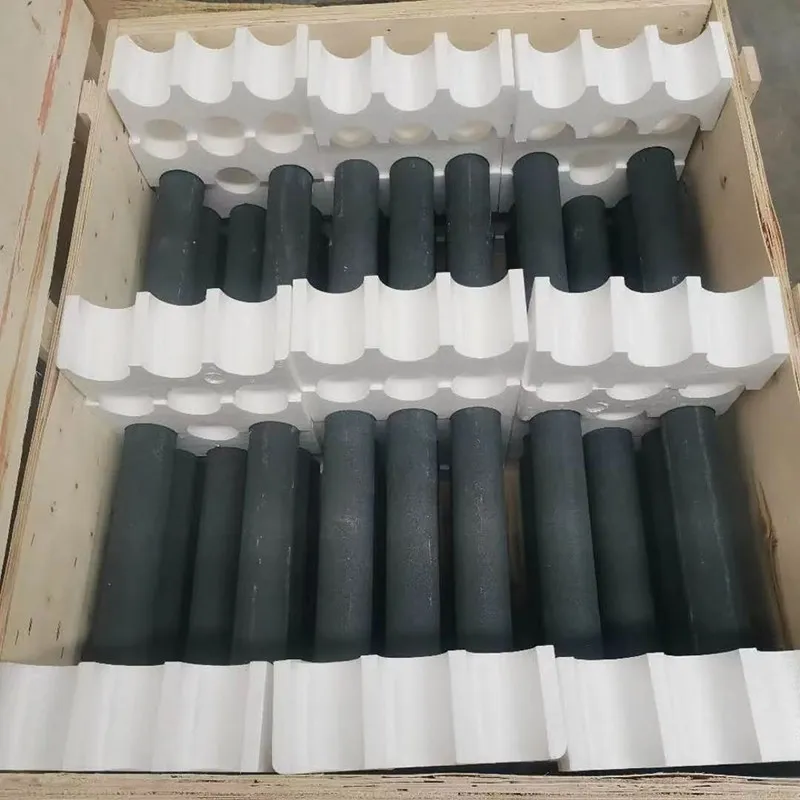
Ceramic Microporous Tube Filter
Main Composition: SiC, Al2O3, kieselguhr, quartz, cordierite and so on
Packing:...
Ceramic Parts
Your Professional Ceramic Parts Supplier
Master Abrasive is a leading Chinese manufacturer specializing in the production of high-quality abrasive materials and related tools. We are committed to delivering superior and consistently reliable products at competitive prices.
Rich Experience
Established in 2000, our factory, Jin Jing Chuan Abrasive, has accumulated over two decades of experience in manufacturing abrasive materials.
Free Samples
We offer complimentary samples to new customers for product evaluation.
Competitive Price
We provide high-quality and stable abrasive materials and related tools at highly competitive prices.
Sales Market
Our products are distributed globally, with a presence in key markets including the United States, Japan, Europe, South America, and various regions across Asia.
Parameter
|
Item |
Parameter |
|
Material |
Silicon Carbide |
|
Pore Size |
0.1μm~10μm |
|
Porosity |
≥35% |
|
Bending Strength |
≥25MPa |
|
The Maximum Service Temperature |
1000℃ |
|
Thermostability (normal temperature-1000℃) |
10 times |
|
Initial Gas Resistance(Pa) |
≤700 |
Applications of Ceramic Parts

High-temperature dust purification and material recovery in the organic silicon and polysilicon industries.
High-temperature and high-pressure gas purification and catalyst recovery in the petroleum and chemical industries.
High-temperature dust purification, process gas and useful material recovery in the chemical industry.
High-temperature smoke and dust purification in the fields of metallurgy and smelting, especially for high-value dusts (such as platinum, rhodium, nickel, tin, lead, copper, titanium, aluminum, etc.).
High-temperature and high-pressure coal synthesis gas filtration and coal dry distillation synthesis gas purification in the coal chemical industry.

High-temperature gas purification in fields such as calcium carbide and ferroalloy processing.
High-temperature synthesis gas purification in the fields of biomass gasification and oil shale gasification.
Removal of dust in high-temperature gas in integrated gasification combined cycle power generation (IGCC).
Features of Ceramic Parts
High filtration accuracy
Made of high-purity alumina ceramics, the pore distribution on the film surface is uniform, and high filtration accuracy can be obtained.
High corrosion resistance and heat resistance
Repeated chemical cleaning is possible. In addition, steam sterilization at about 120 ° C is possible.
High strength and wear resistance
Since it is excellent against internal pressure destruction, filtration of highly viscous liquid and slurry liquid is also effective.
Backwash reproducibility
Back pressure cleaning is possible, and a good and stable filtration flux can be obtained for a long time.
Abundant pore sizes
We have pore diameters from 5 nm to 1.4 μm, so you can select the membrane according to your application.
Maintenance free
It has excellent strength, corrosion resistance, abrasion resistance, and chemical resistance, and can build a maintenance-free system.
Substances That Ceramic Parts Can Remove
● Sediment: Particulate matter like dirt, debris, and rust is effectively filtered out by the ceramic filter’s porous surface.
● Turbidity: Turbidity is cloudiness caused by suspended particles in the water. This turns your water unappetizing shades of yellow and brown. Ceramic filters adeptly remove the murky coloration from water and restore its clarity.
● Chlorine (if filter contains activated carbon): Chlorine is present in most city water because it is used in the municipal purification process. Chlorine leaves water with a bitter chemically taste and an unpleasant smell. The activated carbon reduces both chlorine and chloramines in water, restoring your water’s fresh flavor.
● VOCs (if filter contains activated carbon): Volatile organic compounds, or VOCs, include a wide array of chemical contaminants that make their way into water by way of everything from agricultural runoff to consumer products like paints and pesticides. These compounds are all carbon-based, and ceramic filters with carbon cores will greatly reduce the levels of VOCs in your water.
● Heavy Metals (if filter contains ion exchange resin): If the ceramic element contains an ion exchange resin, heavy metals like lead, mercury, copper, and zinc are greatly reduced in the water.

Installation Precautions for Industrial Ceramic Parts
Size matching
Ensure that the filter size matches the pouring system to avoid being too large or too small.
01
Avoid mechanical damage
Handle with care to prevent collision or falling.
02
Preheating temperature
The preheating temperature should not be too high to prevent the filter from cracking.
03
Pouring temperature
Control the temperature of the molten metal to avoid being too high or too low.
04
Regular replacement
Check and replace the filter regularly to ensure the filtering effect.
05
Cooperation Process

Packaging and Shipping
|
Packaging |
Wooden case or customers requested packing. |
|
Shipping |
We will help you to choose the best shipping way according to your detail requirements. By sea, by air, or by express, etc. |
Our Factory
Master Abrasive is a professional manufacturer of the abrasive materials in China. We focus on providing the good stable quality abrasive materials and related abrasive tools with competitive price. More than 23 years experience in the abrasive industry, we will be your reliable and trustable partner.

FAQ
We're well-known as one of the leading ceramic parts manufacturers and suppliers in China. Please feel free to buy high quality ceramic parts made in China here from our factory. For price consultation, contact us.
wholesale ceramic parts, ceramic parts for water treatment equipment industry, rapid prototyping ceramic parts