

Pink fused alumina is a high - performance abrasive material widely used in various industrial applications. As a supplier of pink fused alumina, I have witnessed its significant impact on the surface finish of workpieces. In this blog, I will explore in detail how pink fused alumina affects the surface finish of the workpiece.
1. Physical and Chemical Properties of Pink Fused Alumina
Pink fused alumina is produced by fusing high - purity alumina powder in an electric arc furnace with a small amount of chromium oxide. The addition of chromium oxide gives it a characteristic pink color and also enhances its physical and chemical properties.
It has a high hardness, typically around 9 on the Mohs scale. This high hardness allows it to effectively cut and abrade the surface of the workpiece. Its crystal structure is dense and uniform, which provides consistent cutting performance. Moreover, pink fused alumina has good thermal stability, which means it can withstand high temperatures generated during the grinding process without significant degradation.
2. Cutting and Abrasion Mechanisms
When pink fused alumina is used for grinding or polishing a workpiece, the cutting and abrasion mechanisms play a crucial role in determining the surface finish.
2.1 Micro - cutting
The sharp edges of the pink fused alumina grains act as micro - cutting tools. As the abrasive grains come into contact with the workpiece surface, they remove small chips of material. The high hardness of pink fused alumina enables it to penetrate the workpiece surface and cut through the material efficiently. This micro - cutting action creates a smooth surface by removing surface irregularities such as burrs, rough peaks, and scratches.
2.2 Self - sharpening
One of the unique features of pink fused alumina is its self - sharpening ability. During the grinding process, the outer layer of the abrasive grains may break off, exposing new sharp edges. This self - sharpening ensures a continuous and consistent cutting performance. As a result, the surface finish of the workpiece remains uniform throughout the grinding operation.
3. Surface Roughness Reduction
The primary goal of using pink fused alumina in many applications is to reduce the surface roughness of the workpiece.
3.1 Initial Roughness Removal
When starting with a workpiece that has a relatively high surface roughness, pink fused alumina can quickly remove the large - scale irregularities. The coarse - grained pink fused alumina is often used in the initial stages of grinding. These large grains can remove a significant amount of material in a short time, reducing the peak - to - valley height of the surface.
3.2 Fine - tuning the Surface
After the initial rough grinding, finer - grained pink fused alumina can be used to further refine the surface. The smaller grains can work on the remaining micro - irregularities, gradually reducing the surface roughness to a very low level. This results in a smooth and shiny surface finish, which is desirable in many industries such as aerospace, automotive, and precision manufacturing.
4. Surface Integrity
In addition to reducing surface roughness, pink fused alumina also has a positive impact on the surface integrity of the workpiece.
4.1 Residual Stress
Proper use of pink fused alumina can help in minimizing the residual stress on the workpiece surface. Residual stress can cause distortion and cracking in the workpiece over time. The self - sharpening and consistent cutting action of pink fused alumina ensure that the grinding forces are evenly distributed, reducing the generation of excessive residual stress.
4.2 Metallurgical Changes
Pink fused alumina's good thermal stability helps to prevent significant metallurgical changes on the workpiece surface. During grinding, excessive heat can cause phase transformations and hardening in the workpiece material. Since pink fused alumina can dissipate heat effectively, it minimizes these undesirable metallurgical changes, preserving the original properties of the workpiece material.
5. Comparison with Other Abrasive Materials
To better understand the impact of pink fused alumina on the surface finish of the workpiece, it is useful to compare it with other common abrasive materials.
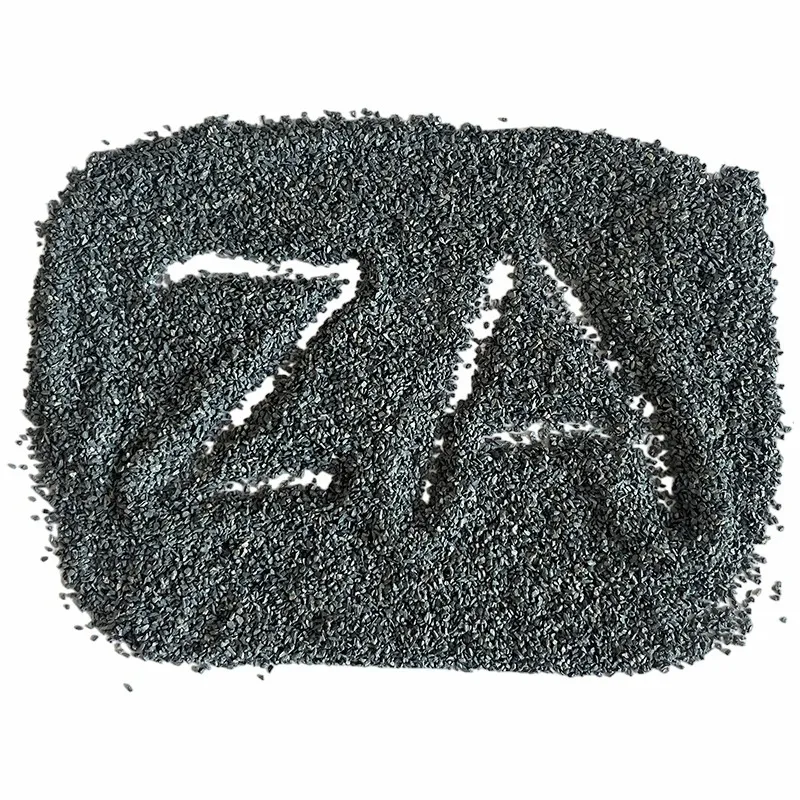
5.1 Zirconia Fused Alumina
Zirconia fused alumina is another popular abrasive material. It has high toughness and is suitable for heavy - duty grinding applications. However, compared to pink fused alumina, zirconia fused alumina may leave a relatively rougher surface finish. Pink fused alumina is more effective in achieving a fine and smooth surface, especially in applications where high - precision surface finish is required.
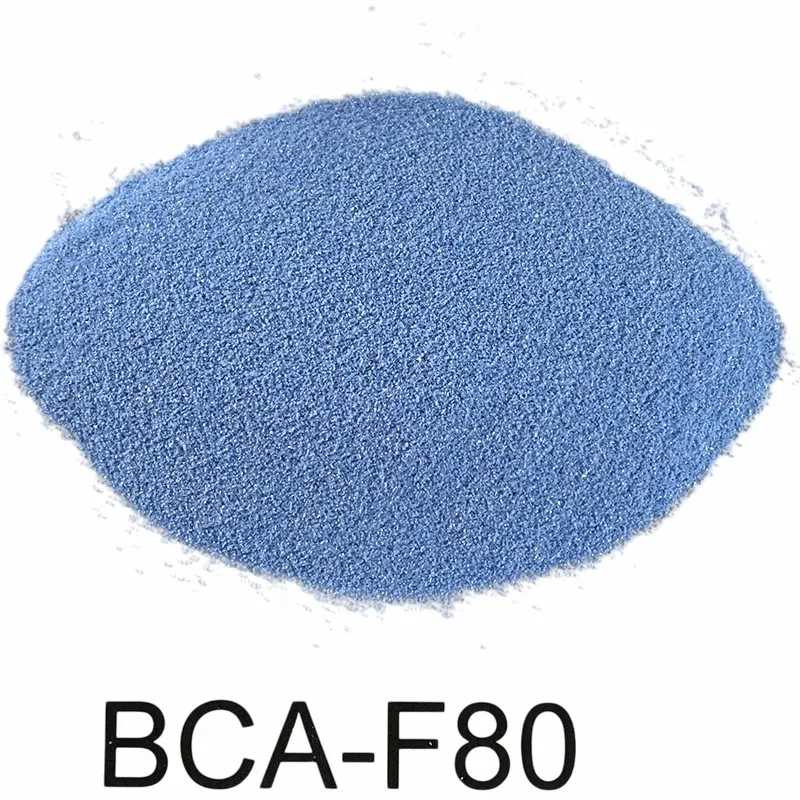
5.2 Blue Ceramic Abrasive Grains
Blue ceramic abrasive grains are known for their excellent self - sharpening and high - speed cutting capabilities. While they can provide a good surface finish, pink fused alumina offers better control over the surface roughness. Pink fused alumina is more suitable for applications where a very consistent and fine surface finish is needed.
5.3 Calcined White Fused Alumina
Calcined white fused alumina is a high - purity abrasive material. It has good hardness and cutting performance. However, pink fused alumina has better wear resistance and self - sharpening properties, which can lead to a more uniform and long - lasting surface finish on the workpiece.
6. Factors Affecting the Impact of Pink Fused Alumina on Surface Finish
Several factors can influence how pink fused alumina affects the surface finish of the workpiece.
6.1 Grain Size
The grain size of pink fused alumina is a critical factor. Coarser grains are used for rapid material removal and initial rough grinding, while finer grains are used for finishing operations. Choosing the appropriate grain size according to the initial surface condition and the desired final surface finish is essential.
6.2 Grinding Parameters
Grinding parameters such as grinding speed, feed rate, and depth of cut also play a significant role. Higher grinding speeds can increase the material removal rate but may also generate more heat, which can affect the surface finish. Optimal grinding parameters need to be selected to achieve the best surface finish while maintaining high productivity.
6.3 Workpiece Material
The type of workpiece material also affects the performance of pink fused alumina. Different materials have different hardness, toughness, and machinability. For example, grinding a hard alloy workpiece may require a different approach compared to grinding a soft aluminum workpiece.
7. Applications of Pink Fused Alumina for Surface Finish Improvement
Pink fused alumina is widely used in various industries to improve the surface finish of workpieces.
7.1 Aerospace Industry
In the aerospace industry, components such as turbine blades, engine parts, and structural elements require extremely high - precision surface finishes. Pink fused alumina is used in grinding and polishing operations to ensure smooth surfaces, which are crucial for aerodynamic performance and fatigue resistance.
7.2 Automotive Industry
In the automotive industry, pink fused alumina is used for grinding engine components, transmission parts, and brake discs. A smooth surface finish on these parts can improve their performance, reduce friction, and increase durability.
7.3 Precision Manufacturing
In precision manufacturing, where components such as optical lenses, medical devices, and electronic parts are produced, pink fused alumina is used to achieve micron - level surface finishes. The high - quality surface finish is essential for the proper functioning of these precision components.
8. Conclusion
As a supplier of pink fused alumina, I am well - aware of its remarkable impact on the surface finish of workpieces. Its high hardness, self - sharpening ability, and excellent thermal stability make it an ideal abrasive material for achieving smooth, uniform, and high - quality surface finishes. By understanding the cutting and abrasion mechanisms, surface roughness reduction, and surface integrity aspects, as well as considering the factors that affect its performance, industries can make the most of pink fused alumina in their manufacturing processes.
If you are looking for high - quality pink fused alumina to improve the surface finish of your workpieces, please feel free to contact us for procurement and further discussions. We are committed to providing you with the best products and services to meet your specific requirements.
References
- ASTM International. Standard Test Methods for Abrasive Grain Size Analysis. ASTM E11 - 17.
- Boothroyd, G., & Knight, W. A. (2006). Fundamentals of Machining and Machine Tools. Marcel Dekker.
- Kalpakjian, S., & Schmid, S. R. (2013). Manufacturing Engineering and Technology. Pearson.