

As a seasoned supplier of abrasive belts, I've witnessed firsthand the diverse needs and applications of these essential tools across various industries. Abrasive belts come in a wide range of sizes, each tailored to specific tasks and machinery. In this blog post, I'll delve into the common sizes of abrasive belts, their typical uses, and how choosing the right size can significantly impact your sanding and grinding operations.
Understanding Abrasive Belt Sizes
Abrasive belt sizes are typically specified by two dimensions: width and length. The width refers to the measurement across the belt, while the length is the distance around the belt's circumference. These dimensions are crucial as they determine the belt's compatibility with different sanding machines and the surface area that can be covered during the sanding process.
Common Widths of Abrasive Belts
1/2 Inch (12.7 mm)
This narrow width is often used for precision sanding tasks, such as working on small, intricate parts or detailed edges. It's ideal for applications where a high level of control is required, like in jewelry making, model building, or fine woodworking. The 1/2-inch abrasive belts are commonly used with handheld belt sanders or small bench-top sanding machines.

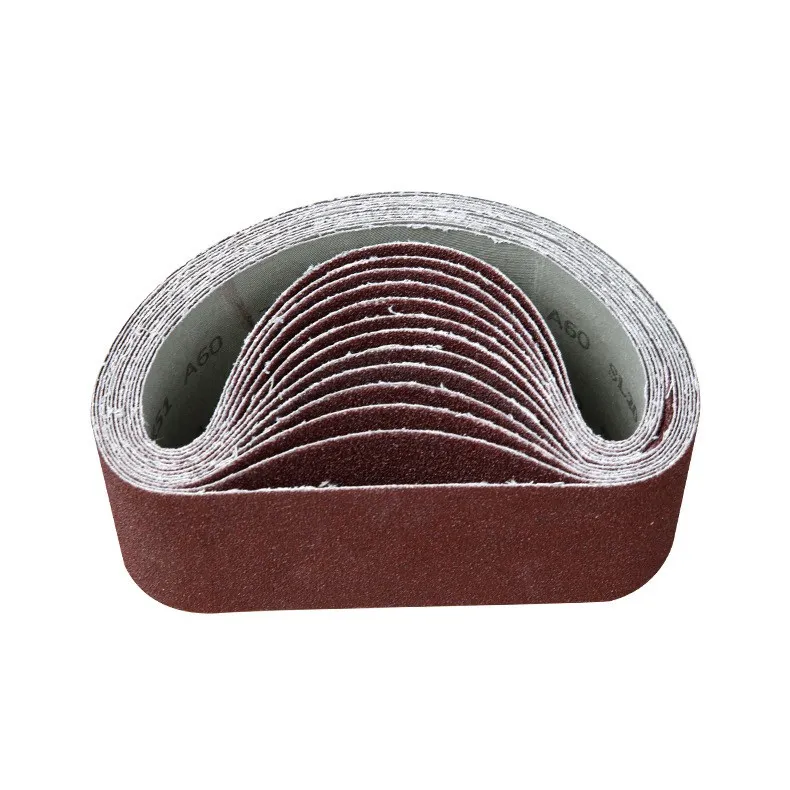
1 Inch (25.4 mm)
The 1-inch wide abrasive belts are a popular choice for both hobbyists and professionals. They offer a good balance between precision and coverage. These belts are suitable for a variety of tasks, including sanding small to medium-sized wood pieces, metal components, and plastics. They are commonly used with handheld belt sanders, spindle sanders, and some small industrial sanding machines.
2 Inches (50.8 mm)
A 2-inch wide abrasive belt is a versatile size that can handle a wider range of sanding applications. It's commonly used in woodworking for sanding flat surfaces, edges, and curves. In the metalworking industry, these belts are used for deburring, polishing, and surface finishing. They are compatible with many belt sanders, both handheld and stationary.
3 Inches (76.2 mm)
This width is often used in industrial settings for heavy-duty sanding and grinding operations. The 3-inch abrasive belts can cover a larger surface area quickly, making them suitable for sanding large wooden panels, metal sheets, and plastic components. They are commonly used with industrial belt sanders and some large benchtop sanders.
4 Inches (101.6 mm)
The 4-inch wide abrasive belts are commonly used in woodworking and metalworking industries for sanding large flat surfaces. They are often used with wide-belt sanders, which are capable of handling large workpieces. These belts can significantly reduce sanding time and provide a more consistent finish.
6 Inches (152.4 mm)
Six-inch wide abrasive belts are typically used in industrial sanding applications where high productivity is required. They are commonly used with wide-belt sanders in the furniture manufacturing, cabinetry, and flooring industries. These belts can cover a large surface area in a single pass, making them ideal for sanding large wooden panels, laminates, and veneers.
Common Lengths of Abrasive Belts
18 Inches (457.2 mm)
This is a common length for small handheld belt sanders and some bench-top sanding machines. The 18-inch abrasive belts are suitable for light to medium-duty sanding tasks, especially when working on small to medium-sized workpieces.
24 Inches (609.6 mm)
The 24-inch length is widely used in both handheld and stationary belt sanders. It offers a good balance between sanding capacity and maneuverability. These belts are suitable for a variety of sanding applications, from woodworking to metalworking.
36 Inches (914.4 mm)
This length is commonly used in industrial belt sanders and some large benchtop sanders. The 36-inch abrasive belts are suitable for sanding larger workpieces and can provide a more continuous sanding operation.
48 Inches (1219.2 mm)
The 48-inch length is often used in wide-belt sanders, which are designed to handle large workpieces. These belts are capable of sanding large wooden panels, metal sheets, and plastic components with high efficiency.
Choosing the Right Size for Your Application
Selecting the appropriate size of abrasive belt depends on several factors, including the type of material you're sanding, the size and shape of the workpiece, and the sanding machine you're using. Here are some tips to help you choose the right size:
- Material and Workpiece Size: For small, intricate parts, a narrow width and shorter length belt may be more suitable. For larger workpieces, wider and longer belts can provide better coverage and efficiency.
- Sanding Machine Compatibility: Make sure the abrasive belt size is compatible with your sanding machine. Check the machine's specifications to determine the maximum and minimum belt width and length it can accommodate.
- Sanding Task: Different sanding tasks may require different belt sizes. For example, if you're sanding a flat surface, a wider belt may be more efficient. If you're sanding a curved surface, a narrower belt may provide better control.
Our Product Range
As an abrasive belt supplier, we offer a wide range of abrasive belt sizes to meet the diverse needs of our customers. Our belts are made from high-quality materials and are available in various grits to suit different sanding applications. In addition to standard sizes, we also offer Custom Abrasive Sanding Belts that can be tailored to your specific requirements.
We also provide other coated abrasive products, such as Black SiC Waterproof Abrasive Paper and Abrasive Cloth Backed Rolls, which are suitable for a variety of sanding and finishing tasks.
Contact Us for Your Abrasive Belt Needs
If you're looking for high-quality abrasive belts or have any questions about our products, please don't hesitate to contact us. Our team of experts is ready to assist you in choosing the right abrasive belt size and grit for your specific application. We are committed to providing our customers with the best products and services at competitive prices. Whether you're a hobbyist or a large industrial manufacturer, we have the abrasive solutions you need.
References
- "Abrasive Technology Handbook"
- "Industrial Sanding and Grinding Guide"
- "Woodworking Abrasives: A Comprehensive Guide"