

Pressure is a critical factor that significantly influences the performance of coated abrasives. As a leading supplier of coated abrasives, I have witnessed firsthand how different pressure levels can bring about diverse effects on the abrasives' functionality, durability, and overall performance. In this blog, I will delve into the various effects of pressure on coated abrasives and explore how understanding these effects can help users make the most of our products.
1. Material Removal Rate
One of the most direct impacts of pressure on coated abrasives is on the material removal rate. When a higher pressure is applied during the sanding or grinding process, the abrasive grains on the coated surface come into more intense contact with the workpiece. This increased contact force allows the grains to cut deeper into the material, resulting in a higher material removal rate.
For example, in heavy - duty metalworking applications where large amounts of material need to be removed quickly, applying a relatively high pressure can be highly effective. Our Custom Abrasive Sanding Belts are designed to withstand high pressures and are ideal for such high - volume material removal tasks. The abrasive grains on these belts are firmly bonded to the backing material, enabling them to maintain their cutting ability even under significant pressure.
However, it's important to note that there is a limit to how much pressure can be applied. Excessive pressure can cause the abrasive grains to break or become dislodged from the backing. Once the grains are damaged or lost, the material removal rate will start to decline rapidly. This is because the broken grains may not be able to cut effectively, and the lack of grains on the surface reduces the overall cutting capacity of the abrasive.
2. Surface Finish
Pressure also has a profound effect on the surface finish of the workpiece. When a lower pressure is used, the abrasive grains tend to make more gentle and controlled cuts on the material surface. This results in a smoother surface finish, which is often desired in applications such as wood finishing or fine - metal polishing.
Our Black SiC Waterproof Abrasive Paper is an excellent choice for achieving a fine surface finish. The silicon carbide abrasive grains on this paper are very sharp and can make precise cuts at low pressures. The waterproof backing allows for wet sanding, which further enhances the smoothness of the surface finish by reducing heat and friction during the sanding process.
On the other hand, high pressure can lead to a rougher surface finish. The intense contact between the abrasive grains and the workpiece under high pressure can cause more aggressive cutting, leaving deeper scratches and unevenness on the surface. In some cases, this may be acceptable, such as in the initial stages of material shaping where a rough finish is followed by subsequent finishing steps. But for applications that require a high - quality, smooth surface, careful control of pressure is essential.
3. Abrasive Belt and Paper Wear
The amount of pressure applied during the use of coated abrasives directly affects their wear rate. Higher pressure means more stress on the abrasive grains and the backing material. The abrasive grains are subjected to greater forces, which can cause them to wear down more quickly. The backing material also experiences more friction and tension, which may lead to premature failure, such as tearing or delamination.
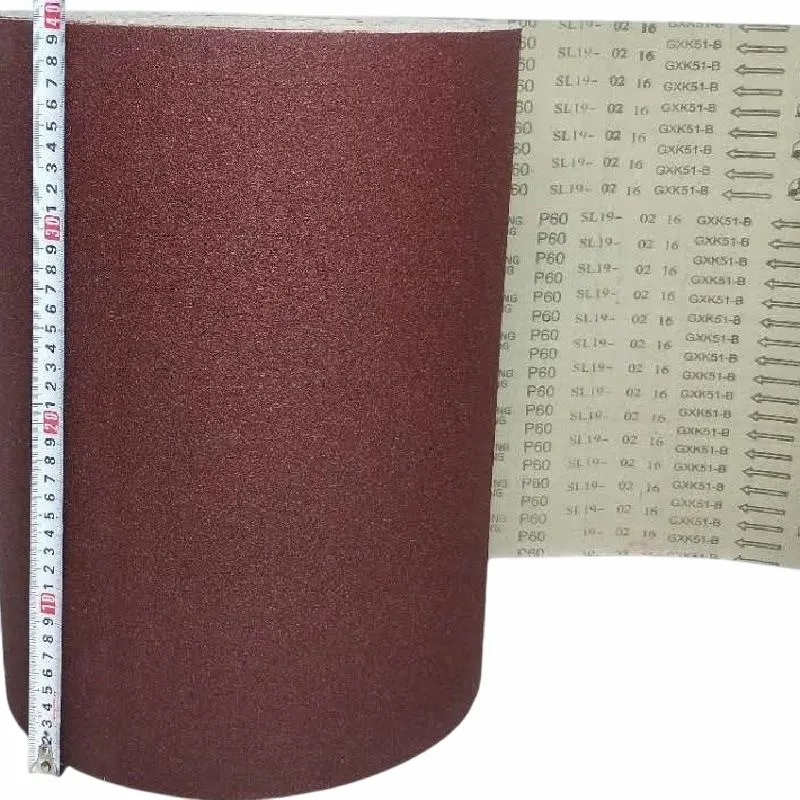
For instance, in applications where the coated abrasive is used continuously under high pressure, the lifespan of the abrasive product can be significantly reduced. Our Abrasive Cloth Backed Rolls are made with a strong and durable cloth backing. This backing material can withstand a certain amount of pressure, but if the pressure is too high, the cloth may start to fray or break, and the abrasive grains may fall off more easily.
Conversely, when a lower pressure is applied, the wear on the coated abrasive is much slower. The abrasive grains can maintain their sharpness for a longer time, and the backing material is less likely to be damaged. This means that the coated abrasive can be used for a longer period, resulting in cost savings for the user.
4. Heat Generation
Pressure plays a crucial role in heat generation during the sanding or grinding process. When high pressure is applied, the friction between the abrasive grains and the workpiece increases significantly. This increased friction generates a large amount of heat. Excessive heat can have several negative effects on both the coated abrasive and the workpiece.
For the coated abrasive, high heat can cause the bonding agent that holds the abrasive grains to the backing to break down. Once the bonding agent fails, the abrasive grains will become loose and fall off, reducing the cutting performance of the abrasive. Moreover, the heat can also cause the backing material to warp or shrink, further affecting the stability and functionality of the coated abrasive.
On the workpiece, high heat can lead to thermal damage. In metalworking, for example, excessive heat can cause the metal to harden or develop cracks, which can compromise the structural integrity of the workpiece. To mitigate the heat generation, proper cooling methods, such as using coolant or air - cooling, should be employed, especially when high pressure is necessary for the material removal process.
5. Cutting Efficiency
Cutting efficiency is closely related to the combination of material removal rate and the wear of the coated abrasive. At an optimal pressure level, the coated abrasive can achieve the highest cutting efficiency. This means that it can remove a large amount of material with a relatively low wear rate, resulting in a cost - effective and time - efficient operation.
Finding the optimal pressure requires considering several factors, such as the type of workpiece material, the grit size of the abrasive, and the specific application requirements. For example, when sanding a softwood, a lower pressure may be sufficient to achieve a good cutting efficiency, while for a hard - alloy steel, a higher pressure may be needed, but still within the limits that the abrasive can withstand.
As a coated abrasives supplier, we understand the importance of helping our customers find the right pressure for their applications. We offer technical support and advice to ensure that our customers can use our products to their full potential. Our sales team is always ready to assist customers in selecting the most suitable coated abrasives based on their specific needs and provide guidance on the proper use of pressure during the sanding or grinding process.
Conclusion
In conclusion, pressure has a wide - ranging impact on the performance of coated abrasives. It affects the material removal rate, surface finish, wear, heat generation, and cutting efficiency. Understanding these effects is crucial for users to achieve the best results when using coated abrasives.
As a trusted coated abrasives supplier, we are committed to providing high - quality products and excellent customer service. Whether you are looking for Black SiC Waterproof Abrasive Paper for a fine - finishing job, Custom Abrasive Sanding Belts for heavy - duty material removal, or Abrasive Cloth Backed Rolls for a specific application, we have the right solution for you.
If you are interested in our coated abrasives or have any questions about their performance under different pressures, please feel free to contact us. We look forward to discussing your requirements and finding the perfect coated abrasive products for your business.

References
- Boothroyd, G., & Knight, W. A. (2006). Fundamentals of machining and machine tools. CRC press.
- Kalpakjian, S., & Schmid, S. R. (2008). Manufacturing engineering and technology. Pearson Prentice Hall.