

Hey there! As a supplier of ceramic parts, I often get asked about the precision levels we can achieve in ceramic parts manufacturing. It's a super important topic, especially when you're looking for high - quality ceramic components for various applications.
Let's start by understanding what precision means in the context of ceramic parts. Precision refers to how closely the final ceramic part matches the design specifications. We're talking about things like dimensions, surface finish, and material properties. In the world of ceramics, achieving high precision is no walk in the park, but it's definitely doable.
Factors Affecting Precision in Ceramic Parts Manufacturing
There are several factors that can influence the precision levels in ceramic parts manufacturing. First off, the raw materials play a huge role. The quality and consistency of the ceramic powders we use are crucial. If the powder has impurities or inconsistent particle sizes, it can lead to variations in the final part. For example, if the particle size is too large, it might cause porosity in the part, which can affect its strength and dimensional accuracy.
The manufacturing process also has a significant impact. There are different methods for making ceramic parts, such as pressing, injection molding, and machining. Each method has its own limitations and capabilities when it comes to precision.
Pressing is a common method for making simple - shaped ceramic parts. It's relatively fast and cost - effective, but it might not be the best for achieving extremely high precision. The pressure applied during pressing can cause some density variations in the part, which can lead to dimensional changes during sintering.
Injection molding, on the other hand, is great for making complex - shaped parts. It allows for better control over the material distribution, which can result in more precise parts. However, it requires specialized equipment and tooling, which can be expensive.
Machining is another option for achieving high precision. After the ceramic part is formed and sintered, it can be machined to achieve the exact dimensions and surface finish required. But ceramics are hard and brittle materials, so machining them can be challenging. Specialized tools and techniques are needed to avoid cracking and chipping.
Achievable Precision Levels
Now, let's get to the nitty - gritty of the precision levels we can actually achieve. In terms of dimensional precision, we can typically achieve tolerances in the range of ±0.01 mm to ±0.1 mm, depending on the part size and complexity. For smaller and simpler parts, we can often get closer to the ±0.01 mm tolerance. But for larger or more complex parts, the tolerance might be closer to ±0.1 mm.
Surface finish is another important aspect of precision. We can achieve a surface roughness (Ra) ranging from 0.1 µm to 10 µm. A lower Ra value means a smoother surface. For applications where a very smooth surface is required, such as in optical or electronic components, we can achieve an Ra of 0.1 µm or even lower.

In terms of material properties, we can tightly control things like density, hardness, and thermal conductivity. The density of the ceramic parts can be controlled within a few percent of the target value. Hardness can also be controlled to ensure that the parts meet the required performance standards.
Applications and the Need for Precision
Different applications have different requirements when it comes to precision in ceramic parts. In the automotive industry, for example, ceramic parts are used in engine components, sensors, and brakes. High precision is essential to ensure proper fit and function within the engine or braking system. Even a small deviation in dimensions can lead to decreased performance or even failure of the component.
In the electronics industry, ceramic parts are used in circuit boards, capacitors, and insulators. Precision is crucial to ensure electrical performance and compatibility with other components. A tiny variation in the dimensions of a capacitor can affect its capacitance value, which can have a significant impact on the overall performance of the electronic device.
The medical industry also relies heavily on high - precision ceramic parts. Ceramics are used in dental implants, bone replacements, and medical sensors. In these applications, precision is not just important for performance but also for patient safety. A poorly - made ceramic implant might not fit properly in the patient's body, leading to complications.
Case Study: Porous Ceramic Filter Tube
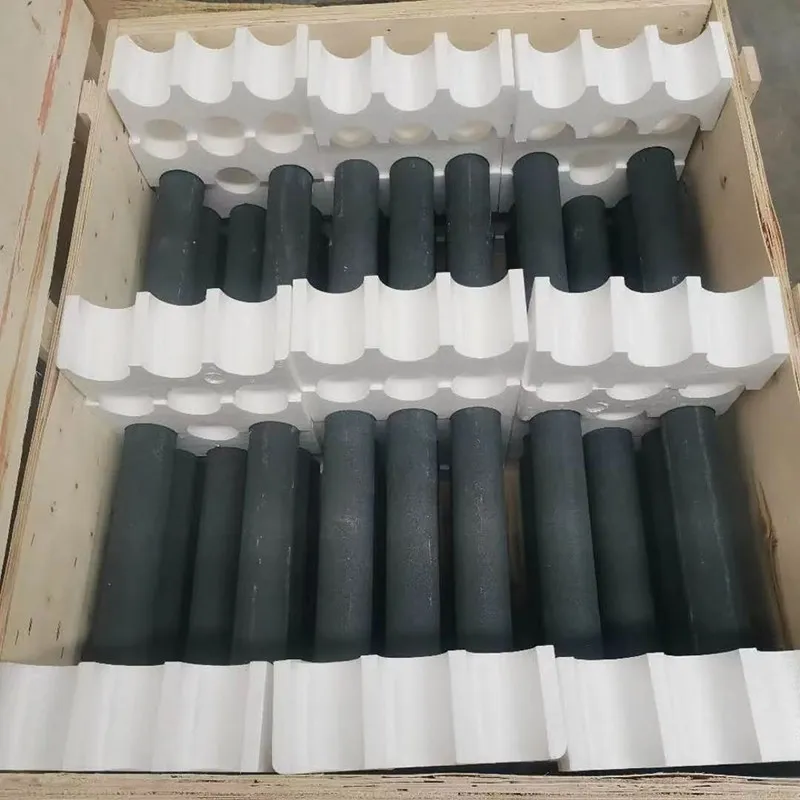
One of our popular products is the Porous Ceramic Filter Tube. This filter tube is used in various industries, such as water treatment and chemical processing, to filter out impurities from liquids or gases. Achieving high precision in the manufacturing of these tubes is crucial for their performance.
The dimensions of the filter tube, such as the diameter and length, need to be precisely controlled to ensure proper fit within the filtration system. The porosity of the ceramic material also needs to be uniform throughout the tube to ensure efficient filtration. By using advanced manufacturing techniques and quality control measures, we can achieve high precision in the production of these filter tubes, resulting in reliable and effective filtration performance.
How We Ensure Precision
At our company, we have a comprehensive quality control system in place to ensure the precision of our ceramic parts. We start by carefully selecting the raw materials from reliable suppliers. We conduct thorough tests on the raw materials to ensure their quality and consistency.
During the manufacturing process, we use state - of - the - art equipment and techniques. Our production team is highly trained and experienced in handling ceramic materials. They closely monitor the process parameters, such as temperature, pressure, and time, to ensure that the parts are manufactured to the exact specifications.
After the parts are manufactured, we conduct a series of inspections. We use advanced measurement tools, such as coordinate measuring machines (CMMs), to check the dimensions and surface finish of the parts. We also perform material property tests to ensure that the parts meet the required standards.
Contact Us for Your Precision Ceramic Parts Needs
If you're in the market for high - precision ceramic parts, we'd love to hear from you. Whether you're in the automotive, electronics, medical, or any other industry, we have the expertise and capabilities to meet your needs. Our team of experts can work with you to understand your requirements and provide you with the best solutions.
Don't hesitate to reach out to us for a quote or to discuss your project in more detail. We're committed to providing you with top - quality ceramic parts at competitive prices. Let's work together to bring your ideas to life!
References
- "Ceramics Manufacturing Technology" by John Doe
- "Precision Engineering in the Ceramic Industry" by Jane Smith