

In the realm of industrial manufacturing and finishing processes, coated abrasives stand as indispensable tools. As a seasoned coated abrasives supplier, I've witnessed firsthand the crucial role these products play in various sectors, from automotive to woodworking. One of the key properties that significantly impacts the performance and usability of coated abrasives is friability.
Understanding Friability in Coated Abrasives
Friability, in the context of coated abrasives, refers to the tendency of the abrasive grains on the coated surface to fracture or break down during the grinding or sanding process. This might seem counterintuitive at first - why would we want the abrasive grains to break? However, this characteristic is actually a desirable and essential trait for efficient abrasive action.
When an abrasive grain starts to wear down during use, its cutting edges become dull. If the grain is non - friable, it will continue to rub against the workpiece rather than cut, generating excessive heat and reducing the quality of the finish. On the other hand, a friable abrasive grain will break into smaller pieces when it becomes dull. These new, sharp edges are then exposed, allowing the abrasive to continue cutting effectively.
Factors Affecting Friability
Abrasive Material
Different abrasive materials have varying degrees of friability. For example, aluminum oxide is a commonly used abrasive material in coated abrasives. It has a relatively high friability, which makes it suitable for a wide range of applications. Aluminum oxide grains break down in a controlled manner, constantly exposing new cutting edges. This property allows it to maintain a consistent cutting performance over a long period.
Another popular abrasive material is silicon carbide. Black silicon carbide, in particular, is known for its high hardness and relatively lower friability compared to aluminum oxide. Black SiC Waterproof Abrasive Paper is often used for applications where a more precise and less aggressive cutting action is required. The lower friability of black silicon carbide means that the grains maintain their shape for longer, making it ideal for finishing operations on hard and brittle materials such as ceramics and glass.
Bonding System
The bonding system used to attach the abrasive grains to the backing material also plays a role in friability. A strong bond can hold the abrasive grains more firmly, reducing their tendency to break. Conversely, a weaker bond may allow the grains to break off more easily. Manufacturers carefully select the bonding system based on the desired application and the friability requirements. For heavy - duty grinding applications, a stronger bond may be used to ensure that the abrasive grains stay in place during high - pressure operations. In contrast, for light - finishing tasks, a weaker bond can be employed to promote the natural friability of the grains.
Manufacturing Process
The manufacturing process of coated abrasives can influence friability. The way the abrasive grains are applied to the backing material, the curing process of the bonding system, and the overall quality control during production all contribute to the final friability of the product. For instance, if the abrasive grains are not evenly distributed on the backing, it can lead to uneven wear and inconsistent friability across the surface of the coated abrasive.
Importance of Friability in Different Applications
Metalworking
In metalworking applications, friability is of utmost importance. When grinding or sanding metals, the abrasive grains are subjected to high forces and heat. A friable abrasive, such as aluminum oxide, is able to break down and expose new cutting edges, preventing the dulling of the grains and reducing the heat generated during the process. This not only improves the efficiency of the grinding operation but also helps to prevent damage to the workpiece, such as heat - induced distortion or discoloration. Custom Abrasive Sanding Belts with the right friability can be customized to meet the specific requirements of different metalworking tasks, whether it's rough grinding of steel or fine finishing of aluminum components.
Woodworking
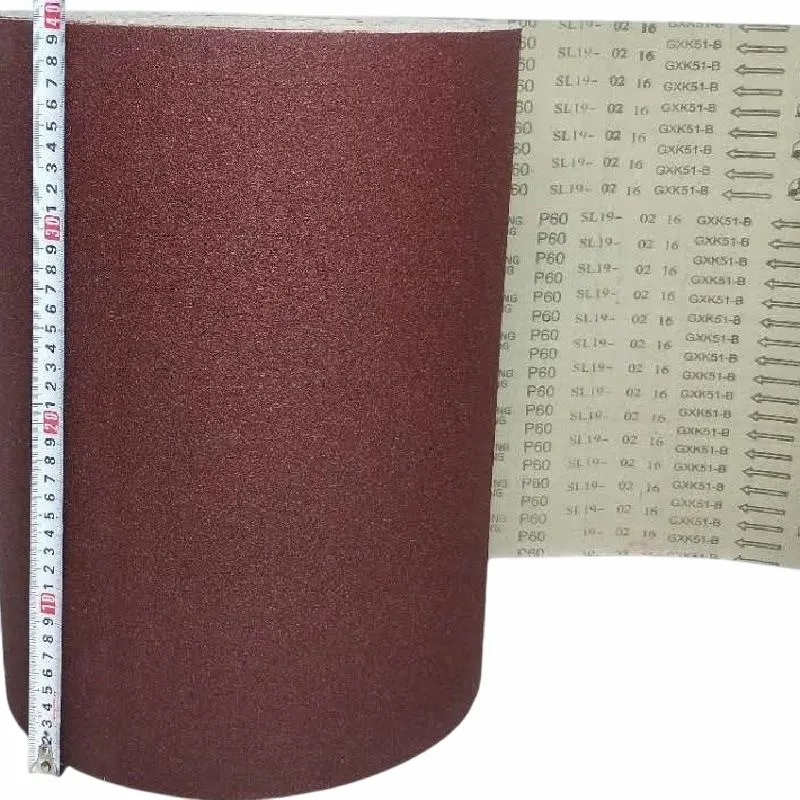
In woodworking, the friability of coated abrasives affects the quality of the finish. For sanding wood, a moderately friable abrasive is often preferred. It allows for efficient removal of material while also producing a smooth surface. If the abrasive is too non - friable, it may burn the wood due to excessive heat generation. On the other hand, if it is too friable, it may wear out too quickly, resulting in inconsistent sanding. Abrasive cloth backed rolls, like Abrasive Cloth Backed Rolls, are commonly used in woodworking, and their friability is carefully engineered to provide optimal performance.
Measuring Friability
Measuring the friability of coated abrasives is a complex process that involves various techniques. One common method is the use of a friability tester. This device applies a controlled force to the coated abrasive surface and measures the amount of abrasive material that breaks off. The results are then analyzed to determine the friability index of the product.
Another approach is to conduct actual grinding or sanding tests on a sample workpiece. By measuring the material removal rate, the surface finish, and the wear of the abrasive over time, manufacturers can assess the friability of the coated abrasive in real - world conditions. These tests are often used in conjunction with the friability tester to ensure accurate and reliable results.

Selecting the Right Coated Abrasive Based on Friability
When selecting a coated abrasive for a specific application, it's essential to consider the friability requirements. For rough grinding operations where high material removal rates are needed, a more friable abrasive is usually the best choice. This allows the abrasive to quickly break down and expose new cutting edges, maximizing the efficiency of the process.
For finishing operations, a less friable abrasive may be preferred. A less friable abrasive can maintain its shape for longer, providing a more consistent and precise finish. It's also important to consider the type of workpiece material, the desired surface finish, and the operating conditions when making a selection.
Conclusion
Friability is a fundamental property of coated abrasives that significantly impacts their performance and suitability for different applications. As a coated abrasives supplier, I understand the importance of providing products with the right friability to meet the diverse needs of our customers. Whether you're in the metalworking, woodworking, or any other industry that relies on coated abrasives, choosing the appropriate product based on friability can lead to improved efficiency, better quality finishes, and cost savings.
If you're interested in learning more about our coated abrasives or have specific requirements for your application, I encourage you to reach out to us for a detailed discussion. Our team of experts is ready to assist you in selecting the perfect coated abrasive solution for your needs.
References
- ASTM International. (Year). Standard test methods for friability of coated abrasives. ASTM XXXX - XX.
- Schmid, H., & Kramer, R. (Year). Coated abrasives: Fundamentals and applications. Abrasive Technology Press.
- Smith, J. (Year). The role of friability in coated abrasive performance. Journal of Abrasive Engineering, XX(XX), XX - XX.