

As a trusted supplier of tabular alumina, I often get asked about the specific surface area of this remarkable material. Tabular alumina is a high - purity refractory ceramic material that has a wide range of industrial applications. Understanding its specific surface area is crucial for many of these applications, as it can significantly impact the material's performance.
What is Specific Surface Area?
Specific surface area (SSA) refers to the total surface area of a material per unit mass. It is usually expressed in square meters per gram (m²/g). In the case of tabular alumina, the specific surface area is an important parameter because it influences the reactivity, adsorption capacity, and sintering behavior of the material.
A higher specific surface area means that there is more surface available for chemical reactions and interactions. For example, in catalyst applications, a larger specific surface area allows for more active sites, which can enhance the catalytic efficiency. In refractory applications, the specific surface area can affect the bonding between particles during sintering, influencing the final mechanical and thermal properties of the refractory product.
Factors Affecting the Specific Surface Area of Tabular Alumina
Several factors can influence the specific surface area of tabular alumina:
Particle Size
One of the most significant factors is the particle size. Smaller particles have a larger specific surface area because the ratio of surface area to volume increases as the particle size decreases. For instance, if we consider a spherical particle, the surface area formula is (A = 4\pi r^{2}) and the volume formula is (V=\frac{4}{3}\pi r^{3}). As (r) (radius) gets smaller, the value of (\frac{A}{V}=\frac{3}{r}) increases. In the production of tabular alumina, different grinding and sieving processes can be used to control the particle size distribution, thereby adjusting the specific surface area.
Pore Structure
The pore structure of tabular alumina also plays a vital role. Tabular alumina can have both open and closed pores. Open pores contribute directly to the specific surface area as they are accessible to external substances. Closed pores, on the other hand, do not contribute to the external surface area but can affect the overall density and other physical properties of the material. The formation of pores can be influenced by factors such as the raw materials used, the calcination temperature, and the presence of additives during the manufacturing process.
Crystal Structure
The crystal structure of tabular alumina can impact its specific surface area. Tabular alumina typically has a corundum ((\alpha - Al_{2}O_{3})) crystal structure. The way the crystals are arranged and their growth patterns can affect the surface roughness and porosity, which in turn influence the specific surface area. For example, a more disordered crystal structure may lead to a higher specific surface area due to increased surface irregularities.
Measuring the Specific Surface Area of Tabular Alumina
There are several methods available for measuring the specific surface area of tabular alumina:
BET Method
The Brunauer - Emmett - Teller (BET) method is one of the most widely used techniques. It is based on the physical adsorption of gas molecules (usually nitrogen) onto the surface of the material at low temperatures. By measuring the amount of gas adsorbed at different relative pressures, the BET equation can be used to calculate the specific surface area. This method provides a reliable measurement of the total surface area accessible to the gas molecules, including both the external surface and the surface of open pores.

Laser Diffraction
Laser diffraction can be used to measure the particle size distribution of tabular alumina. Although it does not directly measure the specific surface area, the particle size data obtained can be used to estimate the specific surface area based on certain assumptions about the particle shape. For example, if the particles are assumed to be spherical, the specific surface area can be calculated from the average particle size.
Applications and the Role of Specific Surface Area
The specific surface area of tabular alumina is of great importance in various applications:
Refractory Industry
In the refractory industry, tabular alumina is widely used in the production of refractory bricks, castables, and monolithic refractories. A proper specific surface area is required to ensure good sintering and bonding between the particles. A higher specific surface area can promote faster sintering, leading to a denser and stronger refractory product. However, if the specific surface area is too high, it may also lead to excessive shrinkage during sintering, which can cause cracking and other defects.
Abrasive Industry
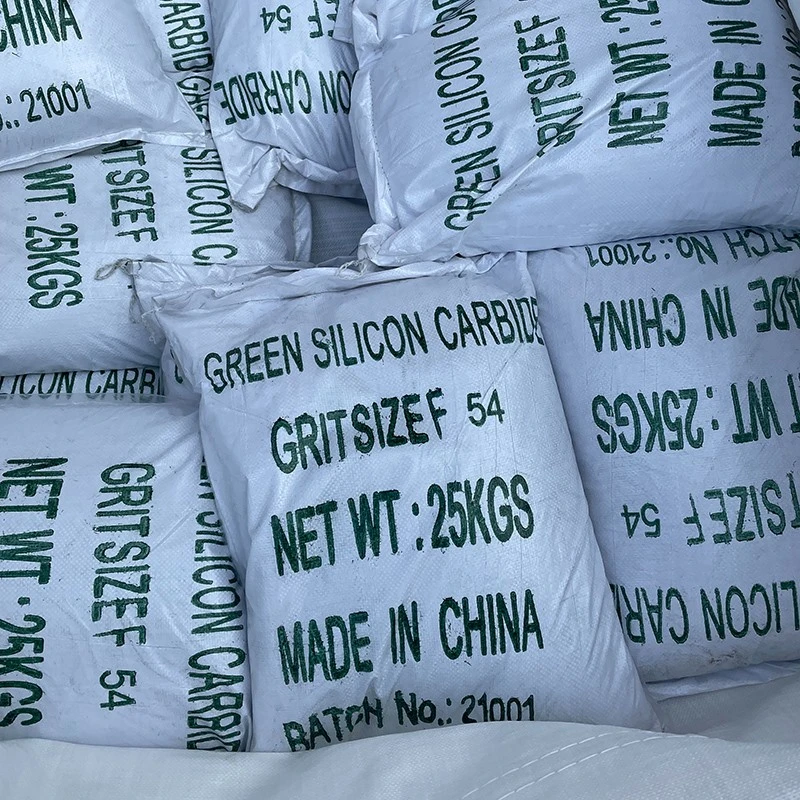
Tabular alumina is also used in the abrasive industry. In abrasive applications, the specific surface area can affect the cutting performance and wear resistance of the abrasive material. A larger specific surface area can provide more cutting edges, improving the cutting efficiency. Other abrasive materials like White Fused Alumina, Black Silicon Carbide for Coated, and Green Silicon Carbide also have their own specific surface area characteristics that impact their performance in different abrasive applications.
Catalyst Support
As a catalyst support, tabular alumina with a high specific surface area can provide a large surface for the deposition of active catalyst components. This increases the contact area between the reactants and the catalyst, enhancing the catalytic activity. The pore structure and specific surface area can be tailored to meet the requirements of different catalytic reactions.
Controlling the Specific Surface Area in Production
As a tabular alumina supplier, we have developed advanced production technologies to control the specific surface area of our products. We carefully select the raw materials to ensure a consistent chemical composition and crystal structure. During the calcination process, we precisely control the temperature and time to optimize the pore formation and crystal growth. Additionally, we use advanced grinding and classification techniques to achieve the desired particle size distribution.
By offering tabular alumina products with different specific surface areas, we can meet the diverse needs of our customers in various industries. Whether you need a product with a high specific surface area for catalytic applications or a more moderate specific surface area for refractory use, we can provide the right solution.
Contact Us for Your Tabular Alumina Needs
If you are interested in purchasing tabular alumina or have any questions about its specific surface area and applications, we invite you to contact us. Our team of experts is ready to assist you in selecting the most suitable product for your specific requirements. We are committed to providing high - quality tabular alumina products and excellent customer service. Let's start a discussion about your tabular alumina needs today!
References
- S. W. Feng, "Introduction to Refractory Materials", 2nd Edition, Metallurgical Industry Press.
- R. J. Brook, "Sintering Theory and Practice", Wiley - Interscience.
- S. Lowell et al., "Characterization of Porous Solids and Powders: Surface Area, Pore Size and Density", Springer.