

Hey there! I'm a supplier of Ceramic Flap Discs, and today I wanna chat about whether a Ceramic Flap Disc can be used on nickel-based alloys. It's a question I get a lot from my customers, so I thought I'd dive deep into it.
First off, let's talk a bit about nickel-based alloys. These alloys are super tough and have some amazing properties. They're known for their high strength, great corrosion resistance, and the ability to handle high temperatures. You'll find them in all sorts of industries, like aerospace, chemical processing, and power generation. In aerospace, they're used in engine components because they can withstand the extreme heat and stress. In chemical processing, their corrosion resistance makes them a top choice for containers and pipes.
Now, what about Ceramic Flap Discs? These babies are pretty awesome. A Ceramic Flap Disc is made up of multiple overlapping abrasive flaps that are typically attached to a backing plate. The abrasive material used in ceramic flap discs is ceramic aluminum oxide, which is a really sharp and durable abrasive. It can hold its cutting edge well and can cut through materials quickly.
So, can you use a Ceramic Flap Disc on nickel-based alloys? The short answer is yes, but there are some things you gotta keep in mind.
One of the big advantages of using a Ceramic Flap Disc on nickel-based alloys is the cutting speed. Nickel-based alloys are hard, and regular abrasive discs might struggle to make a dent. But the ceramic aluminum oxide in Ceramic Flap Discs can slice through them at a decent pace. This means you can get your work done faster, which is always a plus.
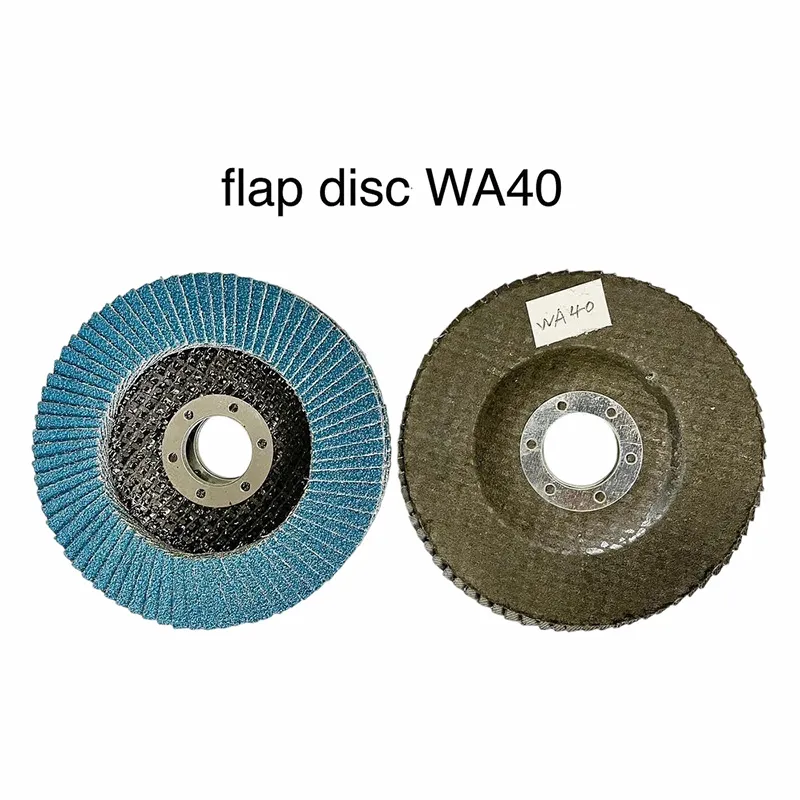

Another pro is the finish. When you use a Ceramic Flap Disc, you can get a nice smooth finish on the nickel-based alloy. This is important in a lot of applications, especially if the part needs to be aesthetically pleasing or if it has to fit precisely with other components.
However, there are also some cons. Nickel-based alloys generate a lot of heat when you're grinding or cutting them. This heat can cause the abrasive grains in the Ceramic Flap Disc to wear out faster. You might also run into issues with the disc loading up. What does that mean? Well, as you're grinding, the metal from the nickel-based alloy can stick to the abrasive grains on the disc, reducing its cutting efficiency.
To deal with these challenges, here are some tips. First, make sure you're using the right pressure. If you press too hard, you'll generate more heat and cause the disc to wear out even faster. On the other hand, if you don't press hard enough, the disc won't cut effectively. It's all about finding that sweet spot.
Second, you might wanna use some kind of cooling agent. This could be a coolant or just a lot of air circulation. Cooling helps to keep the temperature down, which in turn helps to extend the life of the Ceramic Flap Disc.
Now, let me compare Ceramic Flap Discs with other types of flap discs when it comes to working on nickel-based alloys. There's the WA Flap Disc, which uses white aluminum oxide as the abrasive. WA Flap Discs are also good for general-purpose grinding, but they're not as aggressive as Ceramic Flap Discs. When it comes to nickel-based alloys, a Ceramic Flap Disc will generally cut faster and last longer, especially if you're dealing with thick or hard sections of the alloy.
Then there's the Durable Flap Disc. These are designed to be long-lasting, but their performance on nickel-based alloys might vary depending on the specific abrasive used. If it's not a ceramic abrasive, it might not be as effective at cutting through the tough nickel-based alloy as a Ceramic Flap Disc.
In my experience as a supplier, I've seen a lot of customers have great success using Ceramic Flap Discs on nickel-based alloys. But it's important to understand the limitations and how to work around them.
If you're in the market for a good Ceramic Flap Disc for your nickel-based alloy projects, I'd be more than happy to help. I've got a wide range of options that are suitable for different applications and working conditions. We can talk about your specific needs, and I can recommend the best product for you. Whether you're a professional in a big industrial setting or a DIY enthusiast working on a small project, I've got something that'll fit the bill.
So, if you're interested in learning more or making a purchase, don't hesitate to reach out. Let's have a chat about how we can make your nickel-based alloy work easier and more efficient with the right Ceramic Flap Disc.
References
- P.W. Lee, "Materials Science and Engineering of Abrasive Processes", Wiley - Blackwell, 2019.
- R.K. Singh, "Advanced Alloys and Their Applications", Springer, 2021.