

Can a cup grinding wheel be used for fine grinding?
In the realm of grinding operations, the question of whether a cup grinding wheel can be employed for fine grinding is one that frequently arises among professionals and enthusiasts alike. As a supplier of cup grinding wheels, I am well - versed in the capabilities and limitations of these tools, and I am eager to shed light on this topic.
First, let's understand what a cup grinding wheel is. A cup grinding wheel is a type of grinding wheel with a cup - shaped design. It is typically used for surface grinding, deburring, and shaping operations. Cup grinding wheels come in various materials, each with its own unique properties and applications.
One of the key factors in determining whether a cup grinding wheel can be used for fine grinding is the abrasive material of the wheel. Some of the common abrasive materials used in cup grinding wheels include black silicon carbide, pink fused alumina, and brown fused alumina.
Black silicon carbide is a hard and brittle abrasive. It has excellent heat - resistance and self - sharpening properties. Black Silicon Carbide Grinding Wheel is often used for grinding non - ferrous metals, such as aluminum, copper, and brass, as well as hard and brittle materials like ceramics and glass. For fine grinding, the sharp edges of the black silicon carbide grains can remove material precisely, making it suitable for achieving a smooth surface finish on these types of materials.
Pink fused alumina is another high - quality abrasive material. It is known for its high hardness and toughness. Pink Fused Alumina Grinding Wheel is often used for grinding high - speed steel, alloy steel, and other hard metals. The uniform grain size of pink fused alumina allows for consistent material removal during grinding. This property is beneficial for fine grinding, as it helps to produce a more accurate and smooth surface finish on the workpiece.
Brown fused alumina is a widely used abrasive material due to its good balance of hardness, toughness, and cost - effectiveness. Brown Fused Alumina Grinding Wheel is suitable for grinding a variety of ferrous metals, including carbon steel, cast iron, and stainless steel. In fine grinding applications, the relatively large and tough grains of brown fused alumina can withstand the pressure and heat generated during the grinding process, ensuring a stable and efficient grinding operation.
In addition to the abrasive material, the grit size of the cup grinding wheel also plays a crucial role in fine grinding. Grit size refers to the size of the abrasive grains on the surface of the wheel. A smaller grit size means finer abrasive grains, which can produce a smoother surface finish. For fine grinding, a cup grinding wheel with a grit size of 80 or higher is generally recommended. However, it's important to note that using a very fine - grit wheel may result in slower material removal rates, so a balance needs to be struck between the desired surface finish and the production efficiency.
The bond type of the cup grinding wheel is another aspect to consider. The bond holds the abrasive grains together and determines the wheel's hardness and wear resistance. There are several types of bonds, such as vitrified, resinoid, and rubber bonds. Vitrified bonds are commonly used in cup grinding wheels for fine grinding. They offer good heat resistance and dimensional stability, which are essential for achieving precise and consistent grinding results.
Now, let's discuss the advantages of using a cup grinding wheel for fine grinding. One of the main advantages is the large contact area between the wheel and the workpiece. The cup - shaped design allows for a more even distribution of the grinding force, reducing the risk of over - grinding or creating uneven surfaces. This large contact area also enables a higher material removal rate compared to some other types of grinding wheels, while still maintaining a good surface finish.
Another advantage is the versatility of cup grinding wheels. They can be used on a variety of machine tools, including surface grinders, tool grinders, and even some portable grinding machines. This makes them a convenient choice for different grinding applications, whether in a large - scale manufacturing plant or a small - scale workshop.

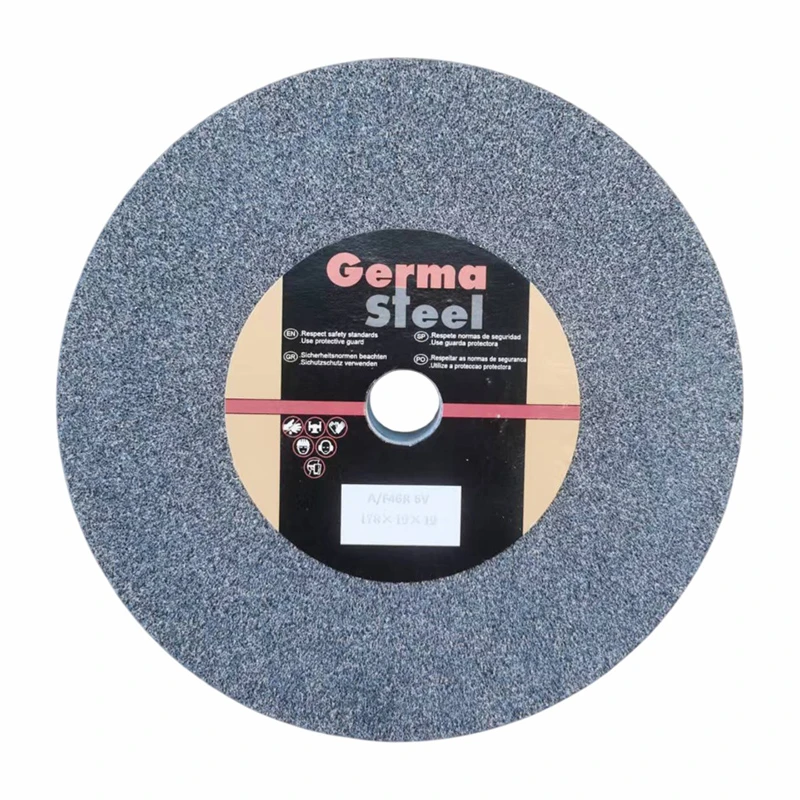
However, there are also some challenges associated with using a cup grinding wheel for fine grinding. One challenge is the potential for wheel loading. Wheel loading occurs when the abrasive grains become clogged with the material being ground, which can reduce the wheel's cutting efficiency and affect the surface finish. To prevent wheel loading, proper coolant usage and regular wheel dressing are necessary.
Another challenge is the need for precise wheel balancing. An unbalanced cup grinding wheel can cause vibration during the grinding process, which can lead to an uneven surface finish and premature wear of the wheel and the machine. Therefore, it's crucial to ensure that the cup grinding wheel is properly balanced before use.
In conclusion, a cup grinding wheel can indeed be used for fine grinding, provided that the right abrasive material, grit size, bond type, and operating conditions are selected. With the appropriate choice of wheel and proper grinding techniques, cup grinding wheels can deliver excellent results in terms of surface finish, dimensional accuracy, and production efficiency.
If you are interested in exploring the possibilities of using cup grinding wheels for your fine - grinding applications, we invite you to contact us for more information. Our team of experts is ready to assist you in selecting the most suitable cup grinding wheel for your specific needs. Whether you require a Black Silicon Carbide Grinding Wheel, a Pink Fused Alumina Grinding Wheel, or a Brown Fused Alumina Grinding Wheel, we have a wide range of products to meet your requirements. Let's start a conversation and find the best grinding solution for your business.
References
- "Handbook of Abrasive Technology", various authors, Publisher: Industrial Press Inc.
- "Grinding Technology: Theory and Applications of Machining with Abrasives", by Stephen Malkin, Publisher: Society of Manufacturing Engineers.