

Hey there! As a supplier of Coated WFA, I often get asked if our product can be used in the leather industry. Well, let's dive right into it and explore the possibilities.
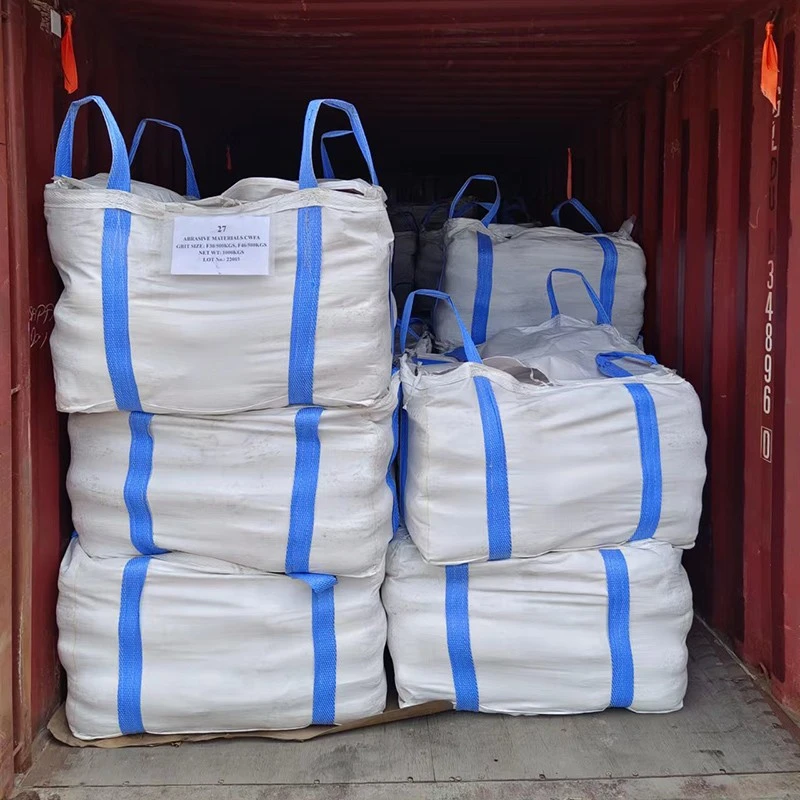

First off, let's understand what Coated WFA is. Coated WFA, or Coated WFA, is a type of abrasive material. It's derived from White Fused Alumina, which is known for its high purity and hardness. The coating on the WFA adds additional properties that can be beneficial in various applications.
Now, when it comes to the leather industry, abrasives play a crucial role. Leather products go through several processes where they need to be smoothed, polished, or textured. This is where Coated WFA might just come in handy.
One of the main advantages of using Coated WFA in the leather industry is its hardness. Leather is a tough material, and you need an abrasive that can stand up to it. Coated WFA has a high hardness rating, which means it can effectively abrade the leather surface without wearing down too quickly. This translates to longer tool life and more consistent results.
Another benefit is the precision it offers. In the leather industry, precision is key. Whether you're creating a smooth finish on a leather jacket or adding a textured pattern to a leather bag, you need an abrasive that can give you the exact results you want. Coated WFA can be manufactured in different grain sizes, allowing you to choose the level of abrasion that's right for your specific application. For a finer finish, you can use a smaller grain size, while a larger grain size can be used for more aggressive abrasion.
But it's not just about hardness and precision. Coated WFA also has good heat resistance. During the abrasion process, friction generates heat. If the abrasive can't handle the heat, it can break down or cause damage to the leather. Coated WFA's heat resistance ensures that it can maintain its integrity even under high-friction conditions, protecting the leather and providing a more stable abrasion process.
Let's talk about the types of leather applications where Coated WFA could be used. One common application is leather buffing. Buffing is the process of smoothing the leather surface to give it a glossy finish. Coated WFA can be used in buffing wheels or belts to achieve a high-quality, uniform finish. It can remove any rough spots or imperfections on the leather, leaving it looking sleek and professional.
Another application is leather embossing. Embossing is used to create decorative patterns on the leather surface. Coated WFA can be used to prepare the leather surface before embossing, ensuring that the pattern will be sharp and well-defined. It can also be used to clean up the edges of the embossed pattern, giving it a more polished look.
In addition to these applications, Coated WFA can also be used in leather sanding. Sanding is used to shape the leather, remove excess material, or create a specific texture. With its various grain sizes, Coated WFA can be used for both coarse and fine sanding, depending on the requirements of the project.
Now, you might be wondering how Coated WFA compares to other abrasives in the market. One popular alternative is Blue Ceramic Abrasive Grains. While Blue Ceramic Abrasive Grains also have their own advantages, such as self-sharpening properties, Coated WFA offers a more cost-effective solution in many cases. It provides similar levels of performance at a lower price point, making it a great choice for leather manufacturers who are looking to save on costs without sacrificing quality.
Of course, like any product, there are some considerations when using Coated WFA in the leather industry. One is the need for proper safety precautions. Abrasives can generate dust, which can be harmful if inhaled. Make sure to use appropriate dust collection systems and personal protective equipment, such as masks and goggles, when working with Coated WFA.
Another consideration is the compatibility with different types of leather. Different leathers have different properties, and you need to make sure that the Coated WFA you're using is suitable for the specific type of leather you're working with. For example, some leathers may be more sensitive to abrasion than others, and you may need to adjust the grain size or abrasion pressure accordingly.
In conclusion, Coated WFA definitely has a place in the leather industry. Its hardness, precision, heat resistance, and cost-effectiveness make it a viable option for a variety of leather applications. Whether you're a small leather workshop or a large-scale leather manufacturer, Coated WFA can help you achieve the high-quality results you're looking for.
If you're interested in learning more about how Coated WFA can benefit your leather manufacturing process, or if you'd like to discuss your specific requirements, I'd love to hear from you. Reach out to us to start a conversation about how we can work together to take your leather products to the next level.
References
- General knowledge about abrasives in the leather industry.
- Product specifications of Coated WFA, White Fused Alumina, and Blue Ceramic Abrasive Grains.