

In the realm of precision manufacturing, centerless grinding stands out as a crucial process that demands high - performance abrasive materials. Among the various abrasives available, Brown Fused Alumina has long been a staple in the industry. As a trusted supplier of Brown Fused Alumina, I am excited to delve into how this remarkable abrasive performs in centerless grinding applications.
Understanding Centerless Grinding
Before we explore the role of Brown Fused Alumina, it's essential to understand centerless grinding. Unlike traditional grinding methods that rely on a workpiece's center for support, centerless grinding uses a regulating wheel and a grinding wheel. The regulating wheel controls the workpiece's rotational speed and feed rate, while the grinding wheel removes material from the workpiece's surface. This process is highly efficient and can achieve excellent dimensional accuracy and surface finish, making it ideal for mass - producing cylindrical parts such as shafts, rods, and pins.
Key Properties of Brown Fused Alumina
Brown Fused Alumina is a synthetic abrasive made by fusing bauxite in an electric arc furnace at high temperatures. This process results in an abrasive with several key properties that make it well - suited for centerless grinding:
Hardness and Toughness
Brown Fused Alumina has a high hardness on the Mohs scale, typically around 9. This hardness allows it to effectively cut through a wide range of materials, including ferrous metals, non - ferrous metals, and some non - metallic materials. At the same time, it exhibits good toughness, which means it can withstand the high forces and impacts encountered during the grinding process without fracturing easily. This combination of hardness and toughness ensures long - lasting cutting performance and reduces the frequency of abrasive wheel dressing.
Self - Sharpening Ability
One of the most significant advantages of Brown Fused Alumina is its self - sharpening ability. As the abrasive grains wear during the grinding process, they break down into smaller, sharp particles. These new cutting edges continuously expose themselves, maintaining the wheel's cutting efficiency. This self - sharpening characteristic not only improves the grinding performance but also reduces the need for frequent wheel dressing, which can save time and costs in the long run.
Heat Resistance
Centerless grinding generates a significant amount of heat due to the high - speed rotation of the grinding wheel and the friction between the wheel and the workpiece. Brown Fused Alumina has excellent heat resistance, which enables it to maintain its cutting performance even at high temperatures. This property helps prevent thermal damage to the workpiece, such as burning or hardening, and ensures a high - quality surface finish.
Performance in Centerless Grinding Applications
Material Removal Rate
In centerless grinding, the material removal rate is a critical factor that affects productivity. Brown Fused Alumina's high hardness and self - sharpening ability allow it to achieve a relatively high material removal rate. The sharp cutting edges of the abrasive grains can quickly penetrate the workpiece's surface and remove material efficiently. This is particularly beneficial when grinding large - volume production parts, as it can significantly reduce the processing time.
Surface Finish
The quality of the surface finish is another important aspect of centerless grinding. Brown Fused Alumina can produce a smooth and consistent surface finish on the workpiece. The self - sharpening action of the abrasive grains helps to maintain a sharp cutting edge, which minimizes the formation of rough spots or scratches on the workpiece's surface. Additionally, the heat resistance of Brown Fused Alumina prevents thermal damage to the workpiece, further enhancing the surface finish quality.
Dimensional Accuracy
Centerless grinding is known for its ability to achieve high dimensional accuracy. Brown Fused Alumina plays a crucial role in this regard. Its consistent cutting performance and wear characteristics ensure that the grinding wheel maintains its shape and size over time. This stability allows for precise control of the workpiece's dimensions, resulting in parts that meet tight tolerance requirements.
Comparison with Other Abrasives
While Brown Fused Alumina offers many advantages in centerless grinding, it's also important to compare it with other abrasives commonly used in the industry, such as Black Silicon Carbide for Coated, Blue Ceramic Abrasive Grains, and Green Silicon Carbide.
Black Silicon Carbide for Coated
Black Silicon Carbide is a harder and more brittle abrasive compared to Brown Fused Alumina. It is often used for grinding non - ferrous metals, ceramics, and glass. However, in centerless grinding of ferrous metals, Brown Fused Alumina is generally a better choice due to its superior toughness and self - sharpening ability.
Blue Ceramic Abrasive Grains
Blue Ceramic Abrasive Grains are a relatively new type of abrasive with excellent cutting performance and long life. They are particularly effective for grinding high - strength alloys and difficult - to - machine materials. However, they are also more expensive than Brown Fused Alumina. For applications where cost - effectiveness is a major concern and the workpiece material is not extremely difficult to grind, Brown Fused Alumina remains a popular choice.
Green Silicon Carbide
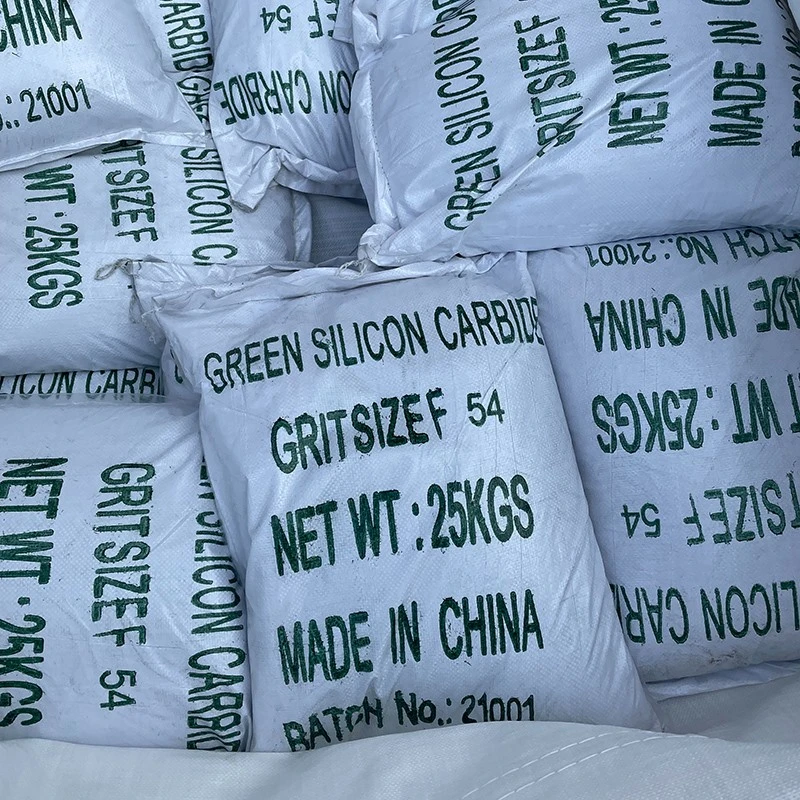
Green Silicon Carbide is similar to Black Silicon Carbide in terms of hardness but has a higher purity and better heat conductivity. It is commonly used for grinding hard and brittle materials such as carbides and ceramics. In centerless grinding of metals, Brown Fused Alumina is usually more suitable because of its better compatibility with ferrous and non - ferrous metals.
Factors Affecting Brown Fused Alumina Performance in Centerless Grinding
Several factors can affect the performance of Brown Fused Alumina in centerless grinding:

Grain Size
The grain size of Brown Fused Alumina significantly impacts the grinding performance. Coarser grain sizes are suitable for rough grinding operations, where a high material removal rate is required. Finer grain sizes, on the other hand, are used for finishing operations to achieve a smooth surface finish. Choosing the appropriate grain size depends on the specific requirements of the workpiece, such as the material, the desired surface finish, and the dimensional tolerance.
Bond Type
The bond type of the grinding wheel also plays an important role. Different bond materials, such as vitrified, resinoid, and rubber, have different properties. Vitrified bonds are hard and brittle, providing good dimensional stability and high grinding efficiency. Resinoid bonds are more flexible and can absorb shocks during the grinding process, making them suitable for applications where a smooth surface finish is required. Rubber bonds are mainly used for precision grinding and polishing.
Grinding Parameters
Grinding parameters, such as the grinding wheel speed, workpiece speed, feed rate, and depth of cut, also affect the performance of Brown Fused Alumina. Optimal grinding parameters need to be selected based on the workpiece material, the abrasive grain size, and the bond type. Incorrect grinding parameters can lead to poor grinding performance, such as low material removal rate, rough surface finish, or excessive wheel wear.
Conclusion
In conclusion, Brown Fused Alumina is an excellent choice for centerless grinding applications. Its unique combination of hardness, toughness, self - sharpening ability, and heat resistance allows it to achieve high material removal rates, excellent surface finishes, and precise dimensional accuracy. While other abrasives may have their own advantages in specific applications, Brown Fused Alumina remains a versatile and cost - effective option for a wide range of centerless grinding tasks.
If you are looking for a reliable source of high - quality Brown Fused Alumina for your centerless grinding operations, please feel free to contact us. We are committed to providing the best products and services to meet your specific needs. Let's work together to achieve outstanding results in your manufacturing processes.
References
- Malkin, S., & Guo, C. (2008). Grinding technology: theory and applications of machining with abrasives. Society of Manufacturing Engineers.
- Trumble, K. (2014). Abrasive machining: processes and technology. CRC Press.