

Both tabular alumina and fused alumina are essential materials in various industrial applications, but they differ significantly in their production processes, properties, and applications. As a trusted tabular alumina supplier, I have in - depth knowledge of both materials and am here to provide a detailed comparison.
Production Processes
Tabular alumina is produced through a sintering process. High - purity alumina powders are first compacted into small pellets or granules. These compacts are then sintered at extremely high temperatures, typically above 1800°C in a rotary kiln or a shaft kiln. During this high - temperature treatment, the alumina undergoes a phase transformation, resulting in a material with a dense, tabular crystal structure. The slow sintering process allows for controlled grain growth, contributing to the material's excellent properties.
In contrast, fused alumina is manufactured by melting alumina feedstock in an electric arc furnace at temperatures around 2000 - 2200°C. The intense heat completely melts the alumina, and upon cooling, the molten material solidifies to form a hard, homogeneous mass. Depending on the starting materials and melting conditions, different types of fused alumina can be produced, such as white fused alumina, Pink Fused Alumina, and brown fused alumina.
Physical and Chemical Properties
One of the key features of tabular alumina is its high density. The sintering process creates a well - packed structure with low porosity. This high density gives tabular alumina excellent mechanical strength, making it resistant to wear and impact. It also has a relatively low thermal expansion coefficient, which means it can withstand rapid temperature changes without significant cracking or deformation.
Tabular alumina has high chemical purity, usually containing over 99% alumina (Al₂O₃). This purity makes it chemically stable and suitable for use in environments where corrosion resistance is required. For example, it can be used in the lining of high - temperature furnaces that handle corrosive substances.
Fused alumina also has high purity, but its properties can vary depending on the type. White fused alumina is very pure, with a high hardness and sharp edges, making it ideal for abrasive applications. Pink fused alumina, on the other hand, is known for its excellent self - sharpening ability and toughness. The high - temperature melting process of fused alumina results in a homogeneous material with a high degree of crystallinity. However, compared to tabular alumina, fused alumina generally has a higher thermal expansion coefficient, which may limit its use in applications where thermal shock resistance is critical.
Application Areas
In the refractories industry, tabular alumina is widely used. Its high strength, low porosity, and thermal shock resistance make it an excellent choice for lining high - temperature furnaces, kilns, and other industrial heaters. For example, in the steel - making industry, tabular alumina is used in the construction of ladles, tundishes, and furnace linings. It can withstand the high temperatures and chemical attacks from molten metals and slag.
In abrasives, tabular alumina is less common compared to fused alumina. However, its unique properties make it suitable for some specialized abrasive applications. Tabular alumina abrasives can provide a more consistent cutting performance due to their uniform microstructure.
Fused alumina is a staple in the abrasives industry. White Fused Alumina is used in precision grinding operations, such as grinding hard - to - machine materials like tool steels and ceramics. Pink Fused Alumina is often used in coated abrasives for metal finishing. Brown fused alumina, which has relatively lower purity but higher toughness, is commonly used in abrasive blasting and heavy - duty grinding.
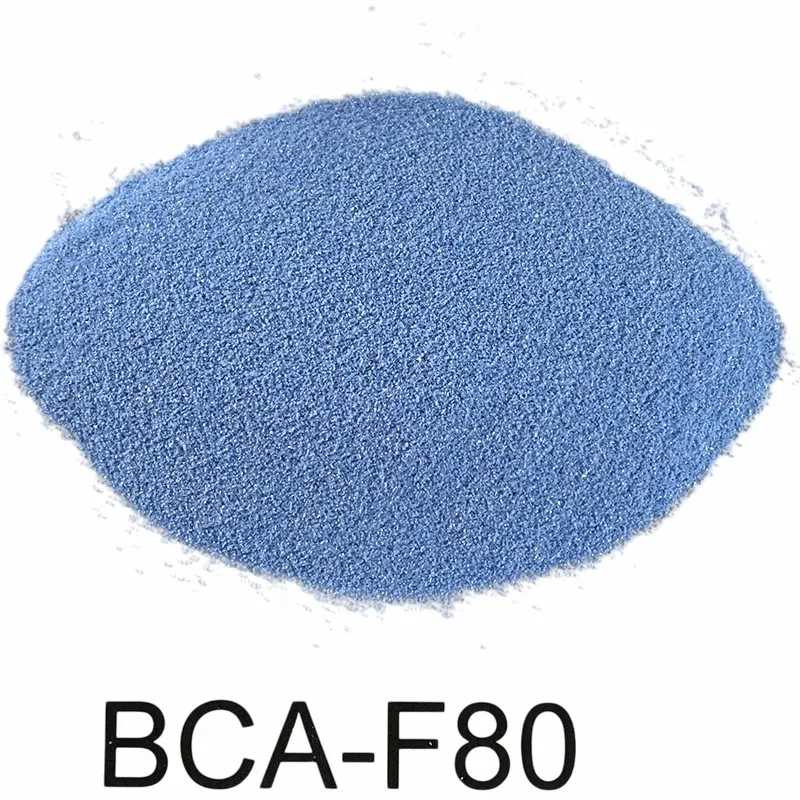
Fused alumina is also used in the production of Blue Ceramic Abrasive Grains and Coated WFA. These advanced abrasive products take advantage of the hardness and cutting ability of fused alumina to provide high - performance grinding solutions.
Cost Considerations
The production cost of tabular alumina is generally higher than that of fused alumina. The sintering process of tabular alumina is more energy - intensive in terms of the long - term high - temperature treatment required. Additionally, the high - purity starting materials and the need for tight process control add to the cost.
However, in applications where the unique properties of tabular alumina are essential, the higher cost may be justified. For example, in high - end refractory applications, the long - term durability and performance of tabular alumina can result in lower overall costs due to reduced maintenance and replacement frequency.
On the other hand, fused alumina is relatively more cost - effective due to its more straightforward melting production process. This makes it the first choice for large - scale applications in the abrasives industry where cost is a major factor.
Environmental Impact
The production of both tabular alumina and fused alumina requires significant energy consumption. The high - temperature processes involved in their manufacturing result in relatively high greenhouse gas emissions.
However, efforts are being made in the industry to reduce the environmental impact. For tabular alumina production, improvements in kiln design and process control can lead to more energy - efficient sintering. In fused alumina production, new furnace technologies are being developed to reduce energy consumption and optimize the melting process.
Quality Control
As a tabular alumina supplier, quality control is of utmost importance. We ensure that our tabular alumina products meet the highest industry standards. Stringent testing is carried out at every stage of production. Chemical analysis is performed to verify the purity of the alumina, and physical property tests such as density, porosity, and hardness are conducted to ensure consistent quality.
In fused alumina production, quality control also focuses on ensuring the purity, crystal structure, and mechanical properties of the product. Quality control measures in the fused alumina industry are tailored to meet the specific requirements of different application areas, especially in the highly demanding abrasives market.
Conclusion
Tabular alumina and fused alumina each have their unique advantages, and the choice between them depends on the specific application requirements. Tabular alumina excels in high - temperature, chemically corrosive environments and applications where thermal shock resistance and mechanical strength are crucial. Fused alumina, with its diverse range of types and excellent abrasive properties, is the go - to material for most abrasive applications.
Whether you are in the refractories industry looking for a high - performance liner material or in the abrasives sector seeking reliable abrasive grains, understanding the differences between tabular alumina and fused alumina is essential. As a professional tabular alumina supplier, I am here to offer you high - quality products and expert advice on the best material for your specific needs. If you are interested in discussing your requirements further or initiating a procurement process, please feel free to contact us. We are committed to providing you with the best solutions and outstanding service.
References
- "Alumina: Properties, Processing, and Applications" by Harry H. Heuer and Lester W. Hobbs.
- "Refractories" by P. C. Patnaik.
- Industry reports and technical literature from major alumina manufacturers.