

In the realm of precision manufacturing, achieving the desired flatness of workpieces during flat surface grinding is a critical objective. As a leading [You can add more descriptive words like "reputable"] abrasive belt supplier, I have witnessed firsthand how abrasive belts play an indispensable role in ensuring the flatness of workpieces. In this blog, I will delve into the mechanisms through which abrasive belts contribute to this crucial aspect of the grinding process.
The Basics of Flat Surface Grinding and Abrasive Belts
Flat surface grinding is a machining process used to create a smooth, flat surface on a workpiece. It involves the use of an abrasive tool to remove material from the surface of the workpiece, typically to achieve a specific tolerance and surface finish. Abrasive belts, as the name suggests, are flexible belts coated with abrasive grains. These belts come in various types, grit sizes, and compositions, each tailored to different grinding applications.
The abrasive grains on the belt are the primary cutting tools. They are bonded to a backing material, which provides support and flexibility. The quality and characteristics of the abrasive grains, as well as the bonding system, significantly influence the performance of the abrasive belt. For instance, Abrasive Cloth is a type of abrasive belt with a cloth backing, which offers good flexibility and conformability, making it suitable for grinding irregularly shaped workpieces.
Factors Affecting Workpiece Flatness in Abrasive Belt Grinding
1. Abrasive Grain Characteristics
The size, shape, and hardness of the abrasive grains are crucial factors in determining the flatness of the workpiece. Coarser grit sizes are generally used for rapid material removal, but they may leave a rougher surface finish. On the other hand, finer grit sizes are used for finishing operations, producing a smoother surface. For achieving high flatness, a combination of different grit sizes may be employed in a multi - step grinding process.
The shape of the abrasive grains also affects the grinding performance. Sharp, angular grains tend to cut more aggressively, while rounded grains may provide a more consistent and smoother grinding action. Additionally, the hardness of the abrasive grains determines their wear resistance. Harder grains, such as Black SiC Waterproof Abrasive Paper, can maintain their cutting edges for longer periods, resulting in more stable grinding and better flatness control.
2. Belt Tension and Tracking
Proper belt tension is essential for maintaining the stability of the abrasive belt during grinding. Insufficient tension can cause the belt to slip or vibrate, leading to uneven material removal and poor flatness. On the other hand, excessive tension can cause the belt to stretch or break, also affecting the grinding quality.
Belt tracking is another critical factor. The belt must run straight and centered on the grinding machine to ensure uniform contact with the workpiece. Any misalignment or wandering of the belt can result in uneven grinding and non - flat surfaces. Modern grinding machines are equipped with belt tracking systems that automatically adjust the position of the belt to maintain proper alignment.
3. Grinding Pressure and Feed Rate
The grinding pressure applied to the workpiece and the feed rate of the workpiece relative to the abrasive belt also impact flatness. If the grinding pressure is too high, it can cause excessive material removal in some areas, leading to uneven surfaces. Conversely, if the pressure is too low, the material removal rate may be insufficient, and the desired flatness may not be achieved.
The feed rate should be carefully controlled to ensure a consistent and uniform grinding process. A too - high feed rate can cause the abrasive belt to overload, resulting in poor surface quality and reduced flatness. A well - balanced combination of grinding pressure and feed rate is necessary to achieve optimal flatness.
Mechanisms by Which Abrasive Belts Ensure Workpiece Flatness
1. Self - Dressing of Abrasive Grains
One of the unique features of abrasive belts is their ability to self - dress during the grinding process. As the abrasive grains wear down, new sharp edges are exposed, maintaining the cutting efficiency of the belt. This self - dressing action helps to ensure a consistent grinding performance, which is crucial for achieving flat surfaces.
When the belt grinds the workpiece, the worn - out grains are gradually removed, and fresh grains take their place. This continuous renewal of the cutting edges allows the belt to remove material evenly across the surface of the workpiece, minimizing the formation of unevenness or high and low spots.
2. Conformability to the Workpiece Surface
Abrasive belts, especially those with flexible backing materials, can conform to the shape of the workpiece surface. This conformability is particularly important for grinding complex or irregularly shaped workpieces. When the belt conforms to the surface, it ensures that the grinding action is distributed evenly over the entire area, resulting in a more uniform material removal and better flatness.
For example, in the case of grinding a slightly curved workpiece, the abrasive belt can adapt to the curvature, applying consistent pressure and removing material uniformly. This ability to conform to the workpiece surface is a significant advantage of abrasive belts over other grinding tools.
3. Multi - Point Contact Grinding
Unlike some other grinding methods that may have a single - point or limited - point contact with the workpiece, abrasive belts provide multi - point contact. The numerous abrasive grains on the belt surface simultaneously engage with the workpiece, distributing the grinding force over a larger area.
This multi - point contact reduces the stress concentration on the workpiece surface, minimizing the risk of local deformation or uneven material removal. As a result, the workpiece is more likely to maintain its flatness during the grinding process.
Quality Control and Inspection in Abrasive Belt Grinding for Flatness
To ensure that the workpiece meets the required flatness specifications, quality control and inspection are essential steps in the abrasive belt grinding process. Various measurement techniques can be used to assess the flatness of the workpiece, such as using a surface plate and a feeler gauge, or more advanced optical measurement systems.
During the grinding process, regular inspections should be carried out to monitor the flatness of the workpiece. If any deviations from the desired flatness are detected, adjustments can be made to the grinding parameters, such as the belt tension, grinding pressure, or feed rate. This real - time feedback loop helps to ensure that the final workpiece meets the strict flatness requirements.
The Role of Abrasive Belt Selection in Achieving Flatness
Selecting the right abrasive belt is crucial for achieving the desired flatness of the workpiece. Different types of abrasive belts are designed for specific applications and workpiece materials. For example, when grinding hard materials, such as steel or carbide, belts with high - hardness abrasive grains, like Abrasive Belt with aluminum oxide or silicon carbide grains, are often preferred.
The grit size of the belt also needs to be carefully chosen based on the initial surface condition of the workpiece and the desired final flatness. A coarse - grit belt can be used for the initial rough grinding to remove a large amount of material quickly, followed by a fine - grit belt for the finishing operation to achieve the required surface smoothness and flatness.
Conclusion
In conclusion, abrasive belts play a vital role in ensuring the flatness of workpieces during flat surface grinding. Through their unique characteristics, such as self - dressing of abrasive grains, conformability to the workpiece surface, and multi - point contact grinding, abrasive belts can achieve a high level of flatness.
However, achieving optimal flatness also requires careful consideration of various factors, including abrasive grain characteristics, belt tension, grinding pressure, and feed rate. Quality control and proper selection of abrasive belts are also essential steps in the process.
As an abrasive belt supplier, I am committed to providing high - quality abrasive belts that meet the diverse needs of the manufacturing industry. Whether you are involved in precision machining, automotive manufacturing, or any other field that requires flat surface grinding, our abrasive belts can help you achieve the desired flatness and surface quality.
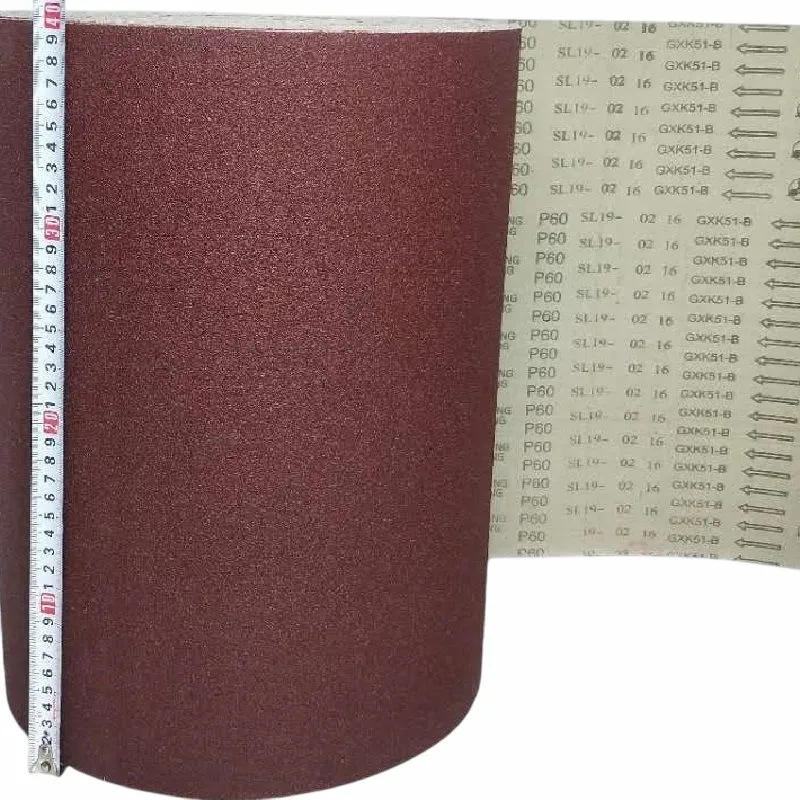

If you are interested in learning more about our abrasive belts or have specific requirements for your grinding applications, please feel free to contact us for further discussion and procurement. We look forward to partnering with you to achieve your manufacturing goals.
References
- "Handbook of Abrasive Technology" by R. Krishnamurthy
- "Grinding Technology: Theory and Applications of Machining with Abrasives" by Paul K. Wright