

Hey there! As a supplier of Coated WFA (White Fused Alumina), I've been getting a lot of questions lately about how our product performs in different pH environments. So, I thought I'd take a deep dive into this topic and share what I've learned.
First off, let's talk a bit about Coated WFA. It's a super - popular abrasive material that we coat to enhance its performance in various applications. Whether it's grinding, sanding, or polishing, Coated WFA has proven to be a reliable choice for many industries.
Now, let's get into the nitty - gritty of how it behaves in different pH conditions.
Acidic Environments (pH < 7)
In acidic environments, the performance of Coated WFA can be quite interesting. When the pH drops, we start to see some chemical reactions happening on the surface of the abrasive. The coating on our Coated WFA is designed to provide a certain level of protection, but in strong acids, things can get a bit tricky.
In mild acidic solutions (say, pH around 4 - 6), the coating acts as a shield, preventing the acid from quickly attacking the underlying White Fused Alumina. The abrasive maintains its sharpness and cutting ability for a relatively long time. This is great for applications where you need a consistent performance, like in the precision grinding of metal parts.
However, in highly acidic solutions (pH < 3), the coating starts to break down. The acid begins to corrode the coating layer, exposing the White Fused Alumina to the acid. Over time, the alumina itself can start to dissolve, which reduces the effectiveness of the abrasive. The cutting edges become duller, and the overall performance of the Coated WFA deteriorates. So, if you're working in a highly acidic environment, you might need to consider using a different abrasive or take extra precautions to protect the Coated WFA.
Neutral Environments (pH = 7)
Neutral environments are like a sweet spot for Coated WFA. At pH 7, there are no extreme chemical reactions taking place. The coating remains intact, and the White Fused Alumina retains its physical and chemical properties.
In a neutral water - based solution, for example, Coated WFA performs really well. It maintains its sharpness, and the cutting action is smooth and efficient. This makes it ideal for applications such as wet sanding of wood or stone, where a neutral pH is common. The coating also helps to prevent the abrasive from clogging, ensuring a consistent performance throughout the process.
Alkaline Environments (pH > 7)
In alkaline environments, the story is a bit different. Mild alkaline solutions (pH around 8 - 10) can actually have a positive effect on the performance of Coated WFA. The alkaline medium can help to clean the surface of the abrasive, removing any debris or contaminants that might accumulate during the grinding or sanding process.
This cleaning action keeps the cutting edges of the Coated WFA sharp, and the abrasive can continue to work effectively. In some industrial cleaning applications where alkaline solutions are used, Coated WFA can be a great choice for removing stubborn stains or rust.
But in highly alkaline solutions (pH > 12), things start to go downhill. The high alkalinity can react with the coating and the White Fused Alumina itself. The coating may start to peel off, and the alumina can undergo chemical changes that affect its hardness and abrasiveness. The abrasive becomes less effective, and its lifespan is significantly reduced.
Comparison with Other Abrasive Grains
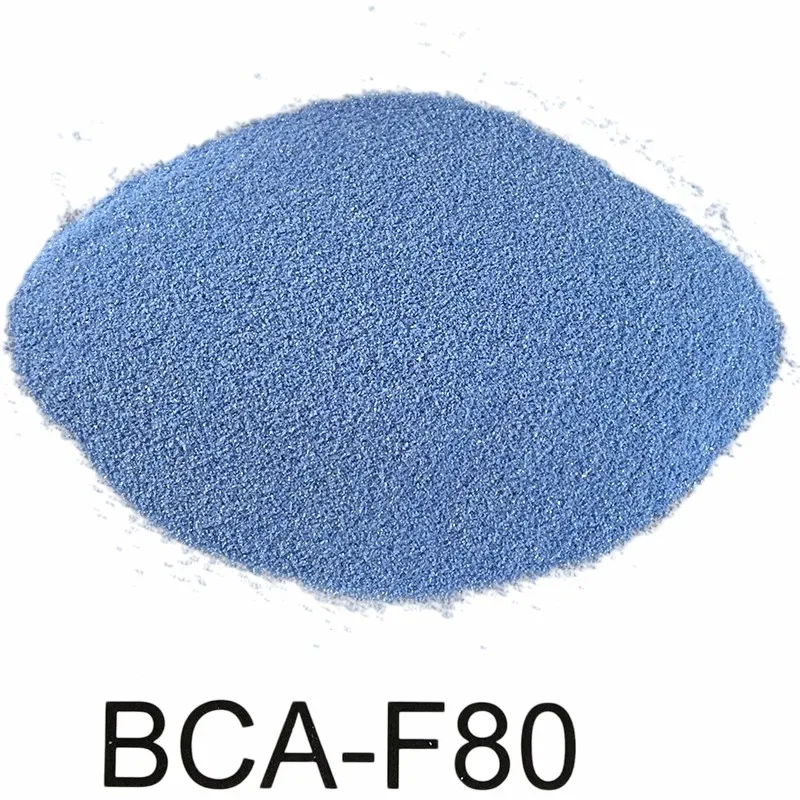
It's also worth comparing Coated WFA with other abrasive grains in different pH environments. For example, Blue Ceramic Abrasive Grains have different chemical compositions and may perform differently in acidic or alkaline conditions. Blue Ceramic Abrasive Grains are known for their high hardness and self - sharpening properties. In acidic environments, they may be more resistant to corrosion compared to Coated WFA, but they also tend to be more expensive.
Pink Fused Alumina is another option. It has a different crystalline structure and may have a different response to pH changes. In alkaline environments, Pink Fused Alumina might be more stable than Coated WFA, depending on the specific application.

Calcined White Fused Alumina is also in the same family as Coated WFA but has undergone a calcination process. This can affect its performance in different pH environments. It may have a different porosity and surface chemistry, which can influence how it reacts with acids and alkalis.
Practical Considerations
When choosing an abrasive for a specific application, it's important to consider the pH of the environment. If you're working in an acidic or alkaline environment, you need to evaluate whether Coated WFA is the right choice. You might need to test the abrasive in a small - scale experiment to see how it performs under the actual conditions.
It's also important to store Coated WFA properly. Exposure to extreme pH environments during storage can also affect its performance. Keep it in a dry and neutral - pH environment to ensure its quality is maintained.
Conclusion
In conclusion, Coated WFA performs differently in different pH environments. It has its strengths in neutral and mild alkaline or acidic conditions, but in extreme pH conditions, its performance can be compromised. By understanding these characteristics, you can make a more informed decision when choosing an abrasive for your specific application.
If you're interested in learning more about our Coated WFA or have any questions regarding its performance in different pH environments, feel free to reach out. We're always here to help you find the best abrasive solution for your needs. Whether you're a small - scale workshop or a large industrial manufacturer, we can provide you with high - quality Coated WFA that meets your requirements. Contact us to start a discussion about your procurement needs and let's see how we can work together to achieve the best results.
References
- Smith, J. (2018). Abrasive Materials and Their Performance in Different Chemical Environments. Journal of Industrial Abrasives, 12(3), 45 - 53.
- Johnson, A. (2019). The Effect of pH on Abrasive Grains: A Comparative Study. Proceedings of the International Abrasive Conference, 23 - 28.
- Brown, R. (2020). Coated Abrasives: Understanding Their Behavior in Various pH Conditions. Industrial Materials Research, 15(2), 67 - 74.