

As a supplier of tabular alumina, I often receive inquiries about its various properties, and one question that comes up quite frequently is, "What is the thermal expansion coefficient of tabular alumina?" In this blog post, I'll delve into this topic, explaining what the thermal expansion coefficient is, why it matters for tabular alumina, and how it compares to other related materials.
Understanding the Thermal Expansion Coefficient
Before we dive into the specifics of tabular alumina, let's first understand what the thermal expansion coefficient is. In simple terms, it is a measure of how much a material expands or contracts when its temperature changes. When a material is heated, its atoms or molecules gain energy and start to move more vigorously, causing the material to expand. Conversely, when it is cooled, the atoms or molecules lose energy and move less, resulting in contraction.
The thermal expansion coefficient is typically expressed as the fractional change in length or volume per degree change in temperature. There are two main types of thermal expansion coefficients: the linear thermal expansion coefficient (CTE), which measures the change in length, and the volumetric thermal expansion coefficient, which measures the change in volume. For most practical purposes, the linear thermal expansion coefficient is the one that is most commonly used and referred to.
Thermal Expansion Coefficient of Tabular Alumina
Tabular alumina is a high - purity, dense form of aluminum oxide (Al₂O₃) that is produced by sintering high - quality alumina powder at extremely high temperatures. It is known for its excellent refractoriness, high strength, and good chemical stability.
The thermal expansion coefficient of tabular alumina is relatively low compared to many other materials. Generally, the linear thermal expansion coefficient of tabular alumina ranges from approximately 7.5×10⁻⁶ /°C to 8.5×10⁻⁶ /°C in the temperature range of 20 - 1000°C. This low thermal expansion coefficient is one of the key properties that make tabular alumina highly desirable in many industrial applications.
Why the Low Thermal Expansion Coefficient Matters
The low thermal expansion coefficient of tabular alumina offers several significant advantages in various applications:
Refractory Applications
In the refractory industry, tabular alumina is widely used to manufacture refractory bricks, castables, and other refractory products. When these products are exposed to high temperatures during industrial processes such as steelmaking, glassmaking, and cement production, they need to maintain their shape and integrity. A low thermal expansion coefficient means that the refractory materials made from tabular alumina will expand less when heated, reducing the risk of cracking and spalling. This increases the service life of the refractory products and helps to ensure the smooth operation of industrial furnaces and kilns.
Abrasive Applications
Tabular alumina is also used as an abrasive material in grinding wheels, sandpapers, and other abrasive products. In abrasive applications, the low thermal expansion coefficient helps to maintain the dimensional stability of the abrasive tools during the grinding process. When the abrasive tool is in contact with the workpiece, friction generates heat. If the material has a high thermal expansion coefficient, it may expand unevenly, leading to changes in the shape of the tool and a decrease in its grinding performance. The low thermal expansion of tabular alumina helps to prevent these issues, ensuring consistent and efficient grinding.
Comparison with Other Abrasive Materials
To better understand the significance of the thermal expansion coefficient of tabular alumina, let's compare it with some other common abrasive materials:
Brown Fused Alumina
Brown fused alumina is another widely used abrasive material. It has a relatively higher thermal expansion coefficient compared to tabular alumina. The linear thermal expansion coefficient of brown fused alumina is around 8.5×10⁻⁶ /°C to 9.5×10⁻⁶ /°C in the 20 - 1000°C temperature range. This higher expansion can sometimes lead to more significant dimensional changes in abrasive tools made from brown fused alumina under high - temperature conditions.

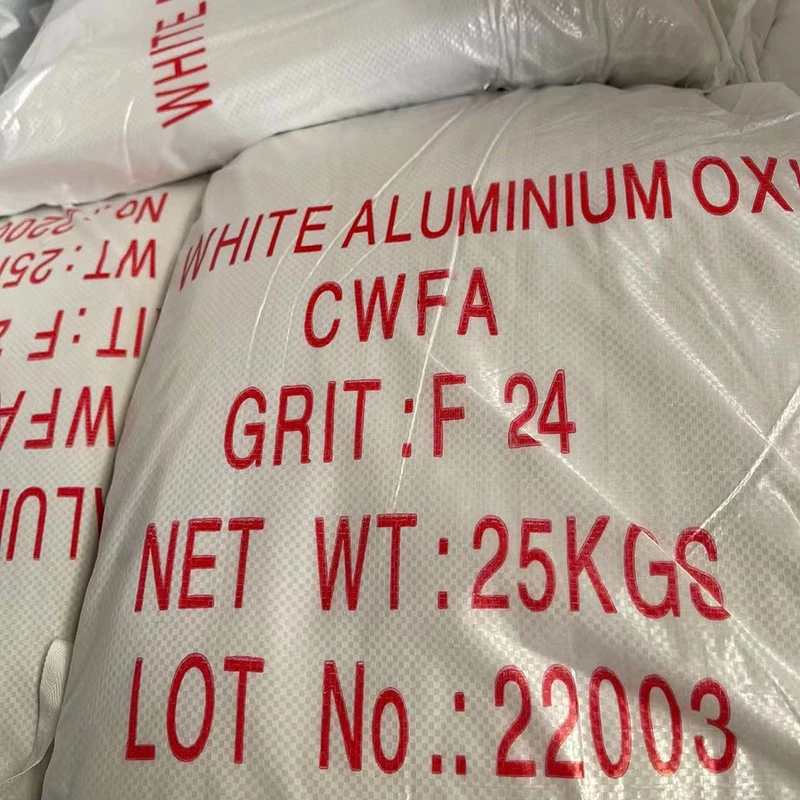
Coated WFA
Coated white fused alumina (WFA) is also a popular choice in the abrasive industry. The thermal expansion coefficient of coated WFA is similar to that of tabular alumina, but tabular alumina often has better overall performance in terms of strength and chemical stability.
Black Silicon Carbide
Black silicon carbide has a different crystal structure and chemical composition compared to tabular alumina. Its thermal expansion coefficient is around 4.2×10⁻⁶ /°C to 4.5×10⁻⁶ /°C in the 20 - 1000°C range, which is lower than that of tabular alumina. However, black silicon carbide is more brittle and has different chemical reactivity, which limits its use in some applications where tabular alumina is preferred.
Factors Affecting the Thermal Expansion Coefficient of Tabular Alumina
The thermal expansion coefficient of tabular alumina can be affected by several factors:
Purity
Higher purity tabular alumina generally has a more consistent and predictable thermal expansion coefficient. Impurities can introduce defects and changes in the crystal structure, which may affect how the material expands and contracts with temperature changes.
Crystal Structure
The crystal structure of tabular alumina can also influence its thermal expansion behavior. Different crystal forms of alumina may have slightly different thermal expansion coefficients. Tabular alumina typically has a well - defined and stable crystal structure, which contributes to its relatively consistent thermal expansion properties.
Manufacturing Process
The manufacturing process, including the sintering temperature and time, can affect the density and microstructure of tabular alumina. A well - sintered tabular alumina with a dense and uniform microstructure will have more stable thermal expansion characteristics.
Conclusion
In conclusion, the thermal expansion coefficient of tabular alumina is an important property that plays a crucial role in its performance in various industrial applications. Its relatively low thermal expansion coefficient makes it an excellent choice for refractory and abrasive applications, where dimensional stability and resistance to thermal stress are essential.
If you are in the market for high - quality tabular alumina and are interested in learning more about its properties or discussing potential applications, I encourage you to reach out to us. We are a reliable supplier of tabular alumina, committed to providing products that meet the highest standards of quality and performance. Contact us to start a procurement discussion and discover how our tabular alumina can meet your specific needs.
References
- "Refractories Handbook" by G. Y. Onoda Jr. and L. L. Hench
- "Abrasive Technology" by R. K. Jain
- Technical data sheets from various tabular alumina manufacturers.