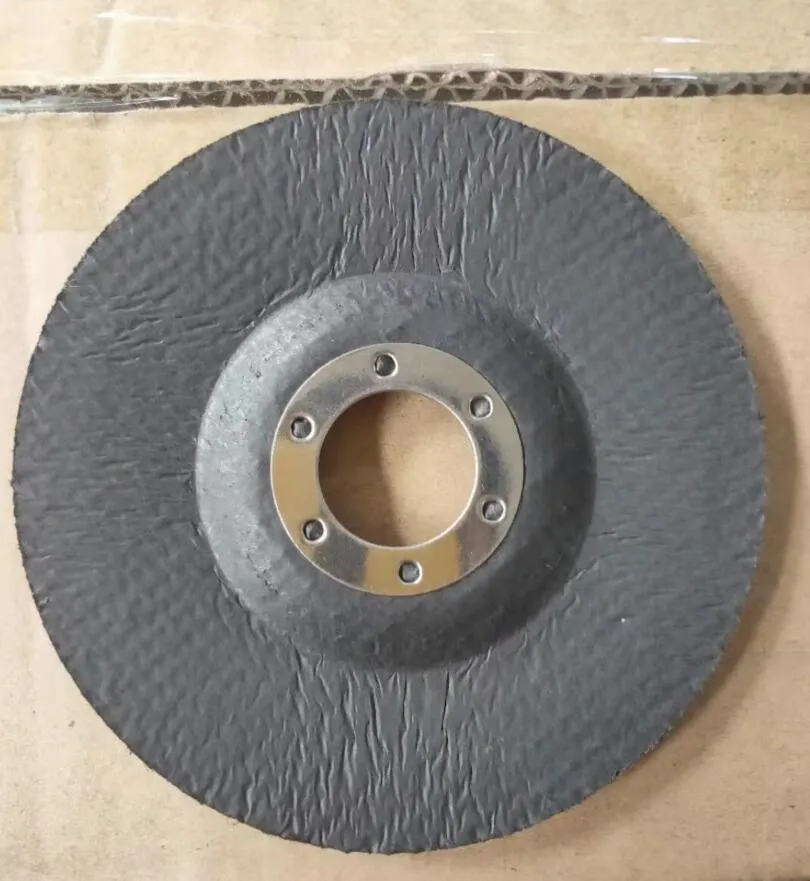
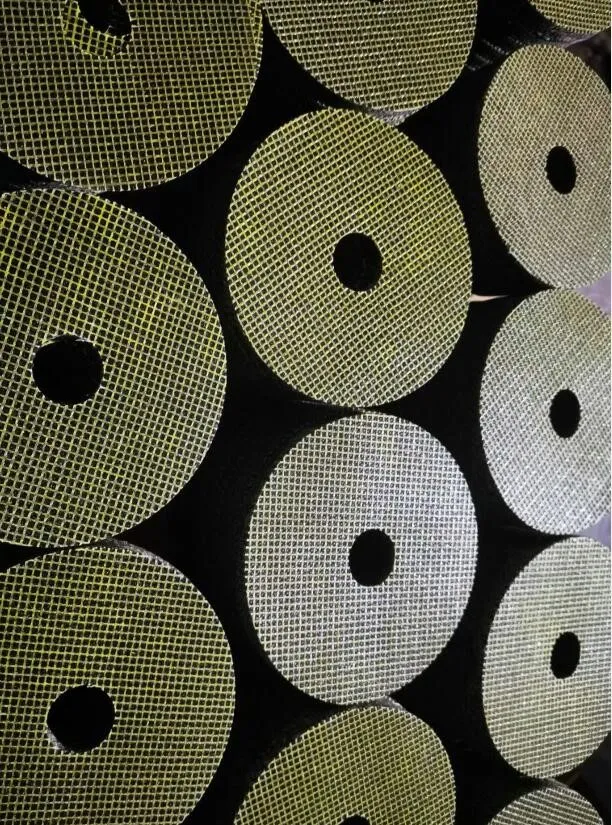
Applications and Advantages of Fiberglass Discs in the Flap Disc Industry
In recent years, the flap disc industry has experienced steady growth as manufacturers seek grinding tools with better safety, stability, and cost efficiency. One component that plays a crucial but often overlooked role in flap disc performance is the fiberglass disc. As the foundation reinforcing the abrasive structure, fiberglass discs directly influence the durability, balance, and operating safety of flap discs used across metalworking, stainless steel fabrication, and industrial maintenance.
Why the Industry Relies on Fiberglass Reinforcement
Fiberglass discs have gradually become the preferred reinforcement layer for flap disc producers for several reasons:
1. High Strength-to-Weight Ratio
Fiberglass discs are manufactured from alkali-free woven fiberglass cloth bonded with high-temperature phenolic resin.
This combination delivers excellent tensile strength-typically over 3000 N, according to EN12413 test standards.
This strength allows flap discs to operate safely at speeds reaching 12,000 to 15,000 rpm, which is essential for modern high-speed grinders.
Despite their strength, fiberglass discs remain extremely lightweight, helping reduce operator fatigue and lowering vibration during grinding.
2. Consistent Balance and Dimensional Stability
Smooth grinding performance depends heavily on the balance of the backing structure.
High-quality fiberglass discs are pressed with precision molds, maintaining a flatness tolerance within ±0.2 mm.
This precision ensures the flap disc rotates smoothly with minimal wobbling-an important factor for both safety and surface finish quality.
3. Heat and Corrosion Resistance
Grinding generates high temperatures, especially during heavy material removal. Fiberglass discs retain their structural integrity under these thermal conditions, avoiding warping or delamination.
Unlike metal reinforcements, fiberglass discs also do not rust, making them ideal for applications involving moisture or stainless steel polishing.
Key Applications in the Flap Disc Industry
Fiberglass discs are used extensively by manufacturers in several ways:
As the main backing for standard T27 and T29 flap discs, ensuring strong adhesion for abrasive flaps made from zirconia, alumina, or ceramic grains.
In heavy-duty industrial flap discs, where higher tensile strength and improved thermal resistance are required.
For automated flap disc production lines, where consistent size, thickness, and resin bonding are critical to maintaining high production efficiency.
In reinforced resin bonded abrasives, where additional support is needed to prevent cracking under high-speed operation.
As the demand for high-performance grinding tools increases, more manufacturers are shifting toward fiberglass reinforcement to meet the requirements of modern machining and metal fabrication industries.
Market Trends and What Buyers Are Looking For
According to purchasing trends observed across Europe, Southeast Asia, and the Middle East, flap disc manufacturers are placing increased importance on:
Stable bonding quality to prevent delamination
Tight dimensional tolerances to reduce vibration
Certifications such as EN12413 and ISO 9001
Cost–performance balance, especially for high-volume production lines
Reliable and consistent supply from experienced manufacturers
This shift highlights the growing recognition of fiberglass discs as a key component contributing to overall grinding efficiency and product safety.
Conclusion
As flap discs continue to evolve toward higher performance levels, the role of the fiberglass disc becomes increasingly important.
Its mechanical strength, temperature resistance, and precise molding make it an essential reinforcement material for abrasive manufacturers aiming for consistent quality and reliable safety standards.
Manufacturers who choose high-quality fiberglass discs can expect better grinding performance, longer product life, and improved operational efficiency-benefits that ultimately strengthen competitiveness in the global abrasive market.