

When people think about sandpaper, they often focus on the backing, coating, or finished surface. But inside every coated abrasive is a critical working component: the abrasive grain. For manufacturers producing sandpaper and abrasive cloth, choosing the right Black Silicon Carbide is not simply a matter of selecting a grit number. Grain characteristics, distribution, bonding, coating process, and the intended application all work together to determine the final product. This makes abrasive grain selection an important part of coated abrasive design.
Why Black Silicon Carbide Is Used in Coated Abrasives?
Black Silicon Carbide has sharp cutting characteristics and is widely used in abrasive products designed for hard or brittle materials. It can be found in applications involving: Glass; Stone; Ceramics; Non-ferrous metals; Composite materials; Surface preparation; Its sharp particle structure can provide effective cutting action while creating the abrasive surface required for different finishing operations. For manufacturers, however, the key question is not simply whether Black Silicon Carbide can be used. The more important question is: Which grain characteristics will produce the desired performance in the finished abrasive cloth?
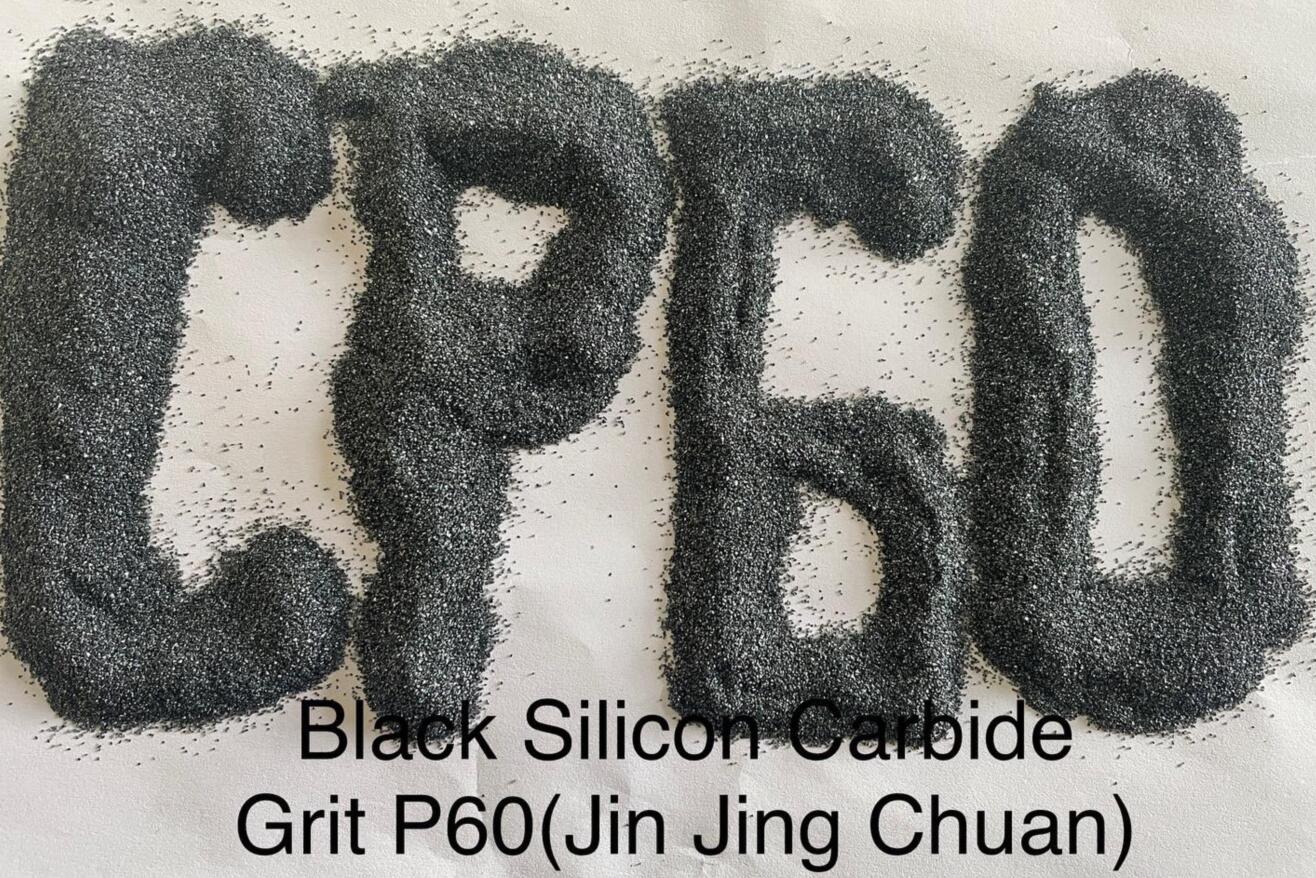
Grit Number Is Only the Beginning.
A common approach to sandpaper production is to begin with the required grit number. That is necessary, but it is not the complete specification.
Abrasive manufacturers should also consider: Particle distribution; Grain shape; Grain sharpness; Chemical characteristics; Surface cleanliness; Batch consistency; Two materials carrying the same grit designation can still behave differently during coating and use. For this reason, manufacturers should establish an internal abrasive specification rather than relying only on the commercial grit name.
Coarse Grits and Fine Grits Have Different Jobs.
The role of the abrasive changes as the particle size becomes finer.
Coarse Abrasive Grain
Coarser particles are generally associated with stronger material removal and more aggressive surface treatment. They may be suitable for applications where the user needs to remove material efficiently rather than create an extremely fine finish.
Fine Abrasive Grain
Fine particles are more relevant to finishing and surface refinement. At these grades, particle-size control becomes increasingly important because unwanted oversized particles can influence the finished surface. Therefore, the manufacturing requirements for coarse and fine coated abrasives should not be treated as identical.
Grain Orientation Can Influence Cutting Action.
In a coated abrasive, abrasive grains are attached to a backing material rather than simply placed loosely on the surface. The orientation and distribution of particles can therefore influence how the abrasive contacts the workpiece. A well-controlled coating process helps create a more consistent abrasive surface. The relationship can be viewed simply as: Grain Characteristics; Grain Distribution; Coating Structure; Cutting Behavior; This is why a good abrasive grain still needs to be integrated properly into the coated abrasive manufacturing process.
The Adhesive System Matters Too.
Abrasive grain and adhesive cannot be considered independently. The bonding system needs to hold the abrasive particles securely during use while allowing the abrasive product to perform its intended cutting function. Factors such as: Adhesive selection; Coating amount; Curing conditions; Grain concentration; Production speed; can influence the final product. If the grain is excellent but the bonding process is poorly controlled, the finished sandpaper may still fail to deliver the expected performance.
Why Particle Distribution Matters in Sandpaper Production?
Imagine two batches of abrasive grain with the same nominal grit. If one batch has a well-controlled particle distribution while the other contains greater variation, the final coated abrasive may behave differently. Potential differences can appear in: Cutting consistency; Surface finish; Abrasive life; Coating uniformity; Product-to-product variation; This is particularly important for manufacturers producing large quantities of coated abrasive cloth. Stable incoming material can make the coating process easier to control.
Match the Abrasive to the Final User.
A sandpaper manufacturer should not select Black Silicon Carbide without considering where the finished product will be used. For example, an abrasive designed for aggressive surface preparation may require different characteristics from one intended for fine finishing. Before selecting the grain, consider:
Workpiece
What material will the end user process?
Working Condition
Is the abrasive used dry, wet, manually, or with machinery?
Performance Target
Is fast stock removal or surface quality the priority?
Product Life
How long should the abrasive remain effective?
Finished Surface
What level of surface refinement is required? This approach moves the purchasing decision from "Which grit should I buy?" to "What abrasive product am I trying to manufacture?"
When Should a Manufacturer Consider P-Type Black Silicon Carbide?
Some coated abrasive manufacturers have more specific requirements for particle shape and grain characteristics. In these cases, an application-oriented grade such as P-Type Black Silicon Carbide may be considered. The important point is not simply choosing a "P-Type" label. The manufacturer should confirm what characteristics the grade is intended to provide and whether they match the coating process and final product requirements. A sample trial is often the most practical way to evaluate this. The test should examine the finished abrasive rather than judging the raw grain alone.
A Better Trial Method for Sandpaper Manufacturers.
When introducing a new abrasive grain, changing the entire formulation at once makes evaluation difficult. A more controlled method is:
Keep the Formula Stable
Use the same backing, adhesive, coating conditions, and curing process.
Change Only the Abrasive Grain
Test the new Black Silicon Carbide against the existing material.
Compare Finished Abrasives
Evaluate: Cutting rate; Surface finish; Abrasive life; Grain retention; Product consistency.
Collect Production Feedback
Laboratory performance is useful, but production-line feedback provides additional information.
Approve the Material
If the results meet the internal standard, establish the material as an approved grade for future purchasing. This method provides a much clearer comparison.
Build a Raw-Material Specification for Your Sandpaper Factory.
Long-term coated abrasive production benefits from a defined raw-material standard. Instead of purchasing simply: "Black Silicon Carbide F60" a factory can establish a more complete specification covering: Grit; Chemical requirements; Particle distribution; Grain characteristics; Packaging; Inspection requirements; Sample approval; Batch consistency; This creates a technical reference for both purchasing and quality-control teams. It also makes future material replacement easier because new suppliers can be evaluated against the same baseline.
Black Silicon Carbide Selection Is Part of Product Design.
For sandpaper manufacturers, abrasive grain should not be treated as an isolated commodity. The finished product is the result of several components working together: Backing; Adhesive; Black Silicon Carbide Grain; Grain Distribution; Coating Process; Curing; Finished Coated Abrasive; If one element changes, the final performance can change as well. That is why experienced manufacturers evaluate abrasive materials according to the complete product system.
Choosing Black Silicon Carbide for sandpaper production involves more than selecting a grit number. Manufacturers need to consider particle characteristics, distribution, coating behavior, adhesive compatibility, production conditions, and the requirements of the final user. For general coated abrasive production, Black Silicon Carbide can provide a useful combination of sharp cutting action and industrial versatility. For more demanding products, application-oriented grades and tighter particle control may be worth evaluating. The most effective strategy is simple: Define the finished abrasive first. Then work backward to determine the abrasive grain characteristics needed to produce it consistently.
Black Silicon Carbide for Coated Abrasive Manufacturers.
Master Abrasive supplies Black Silicon Carbide grains and powders for coated abrasive manufacturers and other industrial users. Different grit sizes and application-oriented specifications can be discussed according to your production process, including requirements for abrasive cloth and sandpaper manufacturing. When requesting a sample or quotation, provide your grit, coating application, backing type, target product, and production requirements. Contact Master Abrasive to discuss the right Black Silicon Carbide specification for your coated abrasive production.
