

Hey there! As an abrasive grains supplier, I often get asked how to choose the right abrasive grains for a specific task. It's a crucial decision because using the wrong ones can lead to inefficient work, poor results, or even damage to the workpiece. In this blog, I'll share some tips and factors to consider when making this choice.
Understanding Abrasive Grains
First off, let's talk a bit about what abrasive grains are. They're the tiny particles that do the actual cutting, grinding, or polishing in abrasive tools. There are various types of abrasive grains, each with its own unique properties and uses.
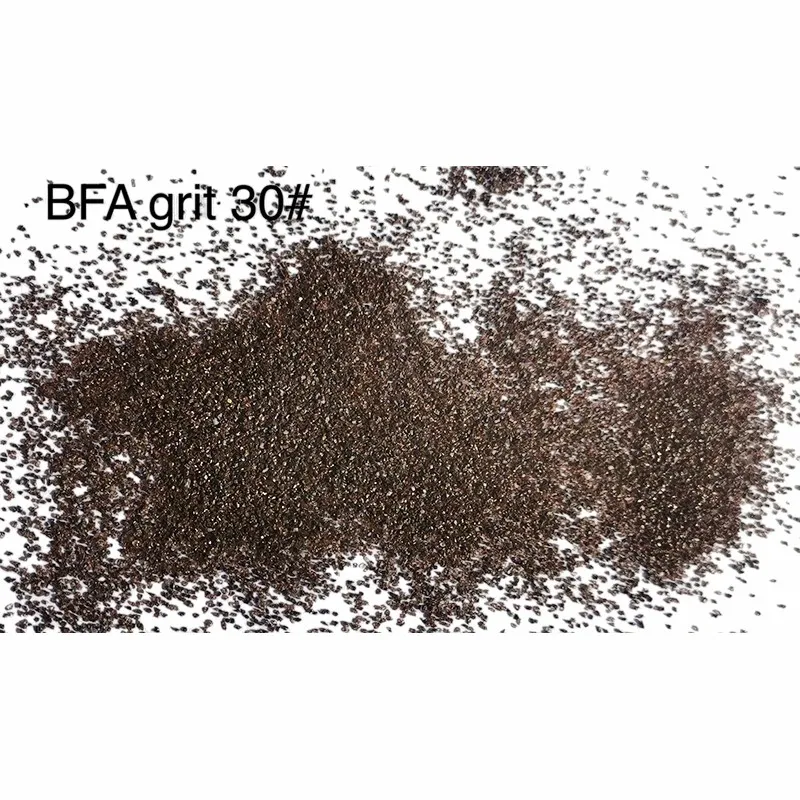
One of the most common types is Brown Fused Alumina. It's tough, durable, and can handle heavy-duty grinding tasks. It's great for grinding metals like steel and iron. The high hardness and good self-sharpening ability of brown fused alumina make it a popular choice in many industrial applications.
Another type is Black Silicon Carbide. It's harder than brown fused alumina and has excellent thermal conductivity. This makes it ideal for grinding non-ferrous metals, ceramics, and glass. Black silicon carbide is also often used in applications where a smooth finish is required.
Then there's Zirconia Fused Alumina. It combines the toughness of alumina with the sharpness of zirconia. Zirconia fused alumina is known for its high abrasion resistance and long service life. It's commonly used in high-pressure grinding operations and for grinding tough alloys.
Factors to Consider When Choosing Abrasive Grains
1. Material of the Workpiece
The material you're working on is probably the most important factor. Different materials require different types of abrasive grains. For example, if you're grinding stainless steel, you'll want an abrasive that can handle the hardness and toughness of the metal. Brown fused alumina or zirconia fused alumina would be good choices here.
On the other hand, if you're working on a softer material like aluminum or brass, black silicon carbide might be a better option. It won't cause as much damage to the workpiece and can provide a smoother finish.
2. Type of Operation
The type of operation you're performing also matters. Are you grinding, cutting, or polishing? Grinding operations usually require coarser abrasive grains to remove material quickly. Cutting operations may need a more precise and durable abrasive. And for polishing, you'll want finer grains to achieve a smooth surface.
For example, if you're using a grinding wheel to remove a large amount of material from a steel workpiece, a coarse-grit brown fused alumina wheel would be suitable. But if you're using a sandpaper to polish a wooden surface, a fine-grit abrasive would be better.
3. Desired Finish
The finish you want to achieve is another key consideration. If you need a rough finish for a subsequent coating or bonding process, you can use a coarser abrasive. But if you're looking for a mirror-like finish, you'll need to use a very fine abrasive and go through multiple polishing steps.
For instance, in the automotive industry, when preparing a car body for painting, a medium-grit abrasive is first used to remove any old paint or rust. Then, a finer abrasive is used to smooth the surface before applying the primer and paint.
4. Cost
Cost is always a factor in any business decision. Some abrasive grains are more expensive than others. You need to balance the cost with the performance and the requirements of your task.
For example, zirconia fused alumina is generally more expensive than brown fused alumina. But if you're working on a high-value workpiece or a critical operation where the quality and efficiency are crucial, the extra cost might be worth it.

5. Safety
Safety should never be overlooked. Some abrasive grains can produce harmful dust or fumes during the grinding process. Make sure to choose abrasive grains that are safe to use in your working environment and follow all the necessary safety precautions.
For example, when using silicon carbide abrasives, proper ventilation is required to prevent the inhalation of silicon carbide dust, which can be harmful to the lungs.
Tips for Making the Right Choice
- Do Your Research: Before making a decision, take the time to research different types of abrasive grains and their properties. Look for case studies or customer reviews to see how they perform in similar applications.
- Test Samples: If possible, get samples of different abrasive grains and test them on a small piece of the workpiece. This will give you a better idea of how they work and which one is the best fit for your task.
- Consult with Experts: Don't hesitate to consult with abrasive grain experts or your supplier. They have the knowledge and experience to help you make the right choice.
Conclusion
Choosing the right abrasive grains for a specific task is not always easy, but it's essential for achieving the best results. By considering factors such as the material of the workpiece, the type of operation, the desired finish, cost, and safety, you can make an informed decision.
As an abrasive grains supplier, I'm here to help you find the perfect abrasive grains for your needs. If you have any questions or need more information, feel free to reach out. Let's work together to ensure your projects are a success!
References
- "Abrasive Technology Handbook" by John Doe
- "Industrial Abrasives: Selection and Application" by Jane Smith