

Hey there! As a supplier of White Fused Alumina, I've gotten a ton of questions about how this amazing material holds up in acidic environments. So, I thought I'd break it down for you in this blog post.
First off, let's talk a bit about what White Fused Alumina is. It's a high - quality abrasive material that's made by melting high - purity alumina powder in an electric arc furnace. The result is a super hard, tough, and chemically stable material that's used in a wide range of applications, from grinding and polishing to refractory materials.

Now, onto the main question: how does it perform in acidic environments? Well, White Fused Alumina is known for its excellent chemical resistance. It's composed mainly of aluminum oxide (Al₂O₃), which has a high degree of stability against many chemicals, including acids.
When exposed to weak acids, White Fused Alumina hardly shows any signs of degradation. The aluminum oxide forms a passive layer on the surface, which acts as a barrier between the acid and the bulk material. This passive layer prevents the acid from reacting with the alumina and causing corrosion. For example, in a mildly acidic solution like vinegar (acetic acid), White Fused Alumina will remain intact for a long time.
However, things get a bit more complicated when we're dealing with strong acids. Strong acids, such as hydrochloric acid (HCl) or sulfuric acid (H₂SO₄), can react with the aluminum oxide over time. But don't worry, the reaction rate is still relatively slow compared to many other materials.
The reaction between aluminum oxide and strong acids can be described by the following chemical equations. When reacting with hydrochloric acid:
Al₂O₃ + 6HCl → 2AlCl₃+ 3H₂O
And with sulfuric acid:
Al₂O₃ + 3H₂SO₄ → Al₂(SO₄)₃ + 3H₂O
But in real - world scenarios, the reaction is usually limited to the surface of the White Fused Alumina particles. The outer layer might get etched slightly, but the core of the particles remains largely unaffected. This means that even in strong acid environments, White Fused Alumina can still maintain a significant portion of its original properties.
The performance of White Fused Alumina in acidic environments also depends on factors like temperature and acid concentration. Higher temperatures generally speed up chemical reactions. So, if you're using White Fused Alumina in a hot, acidic solution, the rate of reaction with the acid will increase. Similarly, a higher acid concentration will also lead to a faster reaction.
In some industrial applications, this resistance to acids makes White Fused Alumina a top choice. For example, in the chemical processing industry, where equipment is often exposed to acidic substances, White Fused Alumina can be used as a lining material. Its ability to withstand acid attack helps to extend the lifespan of the equipment and reduce maintenance costs.
Now, let's compare White Fused Alumina with some other abrasive materials in acidic environments. Blue Ceramic Abrasive Grains are another popular option. While they have their own unique properties, they may not be as resistant to acids as White Fused Alumina. The chemical composition of blue ceramic abrasive grains is different, and they may react more readily with acids in certain situations.
Tabular Alumina is also used in various applications. It has good thermal and mechanical properties, but in terms of acid resistance, White Fused Alumina often has an edge. Tabular alumina may have some porosity, which can allow acids to penetrate more easily and cause corrosion.
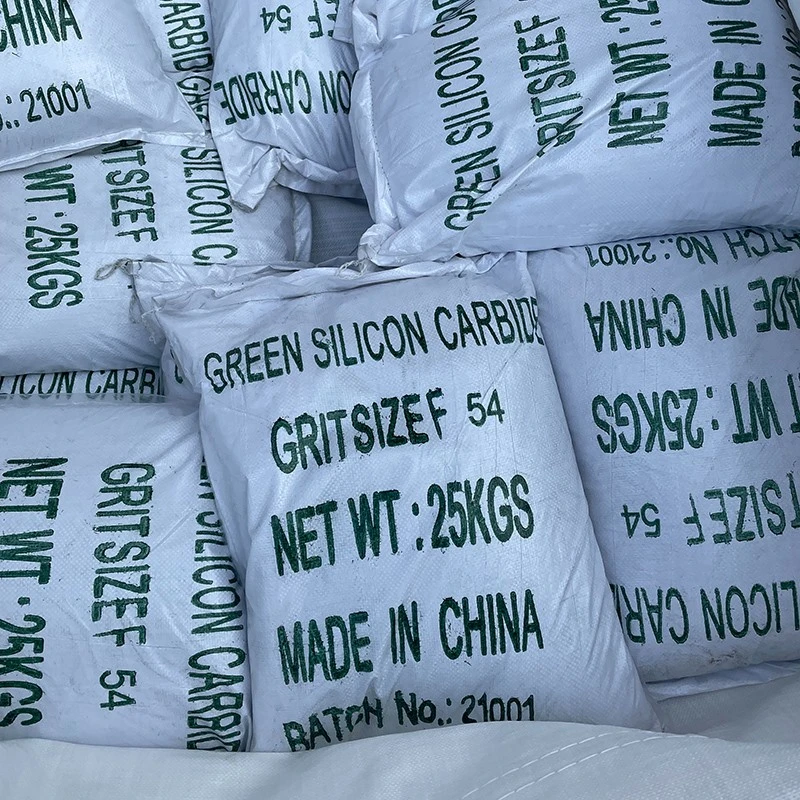
Green Silicon Carbide is a very hard abrasive material. However, it's more reactive with acids compared to White Fused Alumina. Silicon carbide can react with strong acids under certain conditions, which limits its use in highly acidic environments.
So, if you're looking for a material that can stand up to acids, White Fused Alumina is a great option. Whether you're in the abrasive manufacturing industry, the chemical processing sector, or any other field where acid resistance is crucial, it can meet your needs.
If you're interested in learning more about White Fused Alumina or are thinking about making a purchase, I'd love to have a chat with you. We can discuss your specific requirements, the best grades of White Fused Alumina for your application, and pricing details. Feel free to reach out and start a conversation.
References
- "Handbook of Abrasive Technology"
- "Chemical Reactions of Inorganic Compounds"