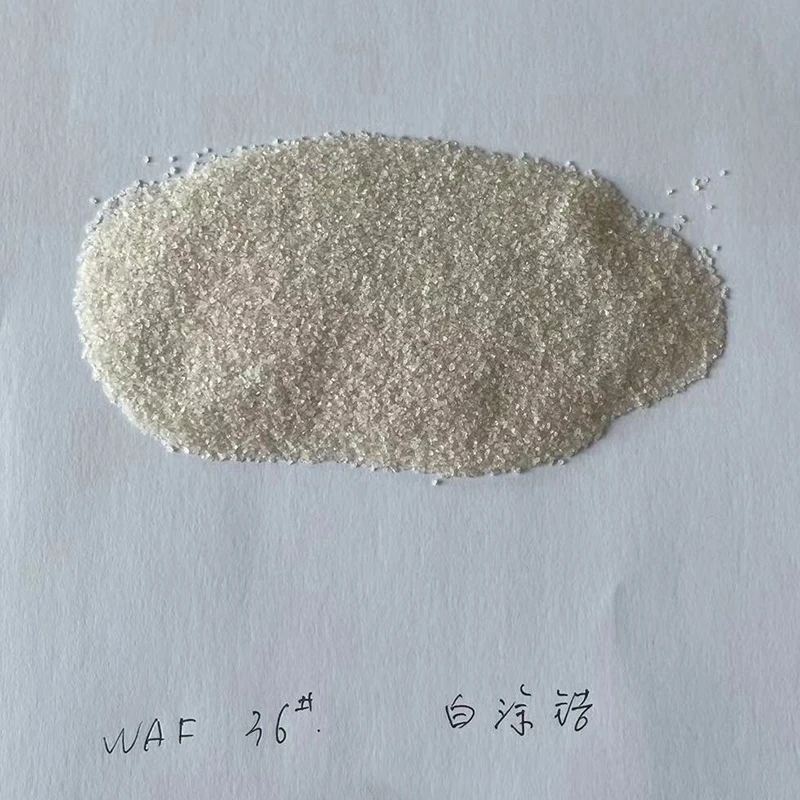
Hey there! As a supplier of White Fused Alumina (WFA), I've had my fair share of experiences dealing with all sorts of questions about this wonderful material. One of the most common inquiries I get is about the compatibility of white fused alumina with other materials. So, let's dive right in and explore this topic!
What Is White Fused Alumina?
Before we jump into the compatibility stuff, let's quickly go over what white fused alumina is. White fused alumina is made by melting high - purity aluminum oxide in an electric arc furnace at extremely high temperatures. It cools down to form a super - hard, white crystalline material. It's known for its high hardness, great chemical stability, and excellent heat resistance. Due to these properties, it's widely used in abrasives, refractories, ceramics, and even in some high - tech industries.
Compatibility with Abrasive Materials
Blue Ceramic Abrasive Grains
When it comes to abrasive work, white fused alumina often gets paired up with other abrasive materials. One such material is Blue Ceramic Abrasive Grains. Blue ceramic abrasive grains are renowned for their sharpness and self - sharpening ability. Combining them with white fused alumina can be a real game - changer.
White fused alumina provides a stable and hard base in abrasive products. Its high hardness helps to maintain the shape of the abrasive tool during the grinding or cutting process. On the other hand, blue ceramic abrasive grains bring in a high cutting efficiency. They can dig into the workpiece more aggressively, while the white fused alumina supports the structure. This combination not only improves the overall cutting performance of the abrasive but also extends its lifespan. For example, in a grinding wheel, the blend of white fused alumina and blue ceramic abrasive grains can handle both rough grinding and finishing operations effectively.
Coated WFA
Coated WFA is another area where compatibility matters. Coated abrasives are made by applying a layer of abrasive grains onto a backing material like paper or cloth. White fused alumina can be used on its own as a coating material, but it can also be combined with other substances.
When combined with certain resin coatings, white fused alumina forms a strong bond. The resin acts as an adhesive to hold the white fused alumina grains firmly in place, while the grains themselves provide the cutting action. Coated WFA can be further enhanced by adding some fine - grained fillers or other abrasive particles. This way, the coated abrasive can be customized to different applications, such as sanding wood, metal, or plastic. The compatibility between the white fused alumina, the coating, and the backing material is crucial for the performance of the coated abrasive product.
Compatibility in Refractory Applications
Tabular Alumina
In the refractory industry, white fused alumina often works alongside Tabular Alumina. Tabular alumina is produced by calcining high - purity aluminum hydroxide at high temperatures. It has a dense structure and good thermal shock resistance.
The compatibility between white fused alumina and tabular alumina is quite good. White fused alumina has a high refractoriness, which means it can withstand extremely high temperatures without melting or deforming. Tabular alumina, on the other hand, helps to improve the thermal shock resistance of the refractory material. When combined, they can create refractory products that are suitable for use in high - temperature environments such as steelmaking furnaces, cement kilns, and glass - melting furnaces.
In a refractory brick, for example, the white fused alumina provides the high - temperature strength and chemical stability, while the tabular alumina helps to prevent cracking when the temperature changes rapidly. This combination ensures that the refractory brick can last longer under harsh operating conditions.
Compatibility with Bonding Materials
In both abrasive and refractory products, bonding materials are used to hold everything together. White fused alumina is compatible with a variety of bonding materials.
Resin Bonds
Resin bonds are commonly used in abrasive products. The compatibility between white fused alumina and resin bonds is excellent. The resin can wet the surface of the white fused alumina grains, creating a strong mechanical and chemical bond. This bond allows the abrasive grains to stay in place during the grinding process and also helps to dissipate heat generated from the friction.
Ceramic Bonds
In the case of ceramic bonds, white fused alumina is also well - suited. Ceramic bonds can withstand high temperatures, making them ideal for high - speed and high - pressure grinding operations. The white fused alumina particles can be evenly distributed in the ceramic matrix, and the bond provides the necessary support for the grains to perform their cutting function.
Compatibility with Metals and Alloys
When it comes to metalworking, white fused alumina is often used in grinding and polishing operations. It has good compatibility with many metals and alloys.
For ferrous metals like steel, white fused alumina can effectively remove excess material, smooth out rough surfaces, and improve the surface finish. Its high hardness allows it to grind through the tough steel matrix without excessive wear.
For non - ferrous metals such as aluminum and copper, white fused alumina can also be used. However, care must be taken to avoid loading, which occurs when the metal clogs the pores of the abrasive. In such cases, suitable lubricants or coolants can be used to ensure the compatibility between the white fused alumina and the non - ferrous metal.
Conclusion and Call to Action
So, as you can see, white fused alumina is incredibly versatile and has excellent compatibility with a wide range of materials. Whether you're in the abrasive, refractory, or metalworking industry, white fused alumina can be a valuable addition to your product or process.
If you're interested in exploring the potential of white fused alumina for your business, I'd love to have a chat. We have a wide range of white fused alumina products that can be tailored to your specific needs. Let's discuss how we can work together to find the perfect solution for your application. Drop me a line and let's start this exciting journey of innovation and improvement.
References
"Handbook of Abrasive Technology", Publisher: ABC Publishing
"Refractory Materials: Principles and Applications", Author: John Doe, Publisher: XYZ Press
"Abrasive Materials and Their Applications", Journal: Industrial Abrasive Research, Volume 10, Issue 2