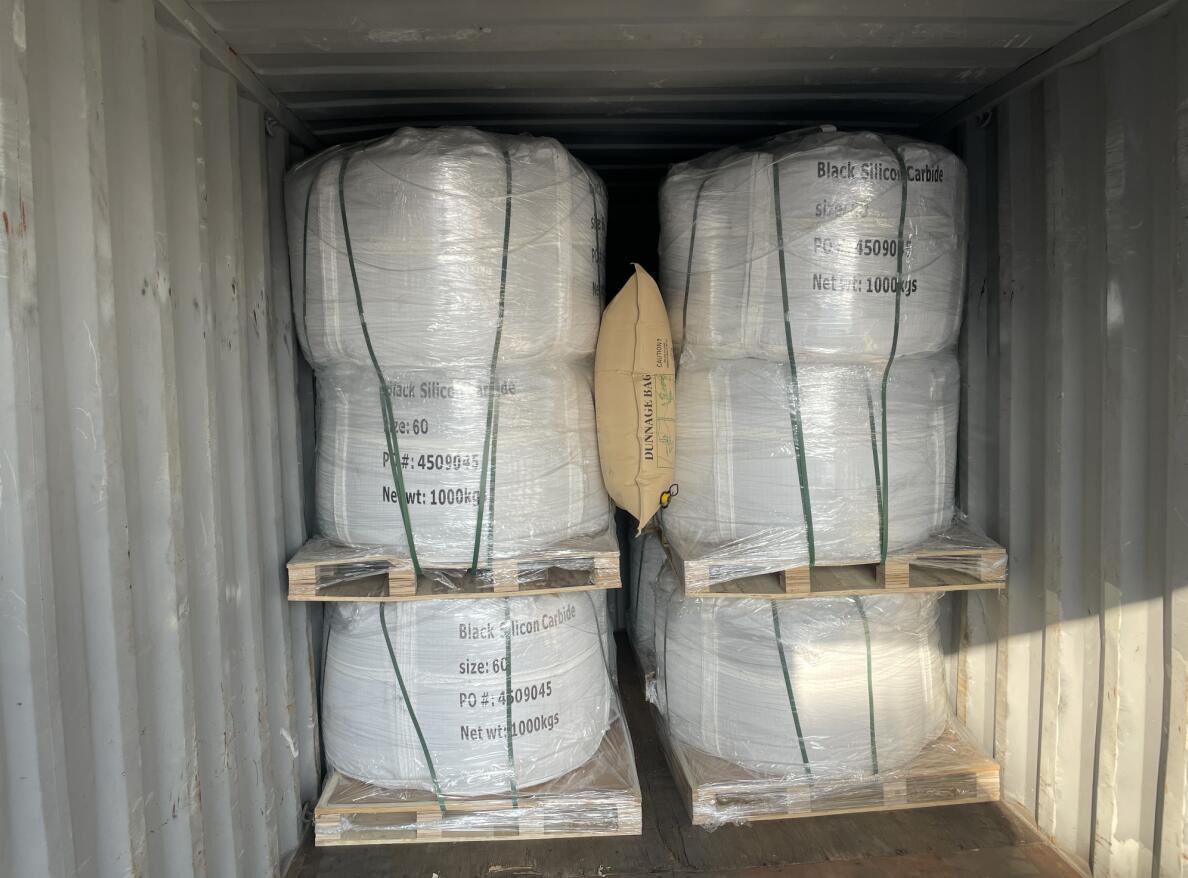
Black Silicon Carbide is widely used in abrasive tools, coated abrasives, refractory products, surface treatment, and other industrial applications. But what actually happens before a Black Silicon Carbide grain reaches a factory? The finished abrasive is the result of several carefully controlled stages. The production process affects chemical composition, grain characteristics, particle distribution, and ultimately how the material behaves in an application. Understanding this process can help buyers better understand why different grades and processing requirements can produce different results.
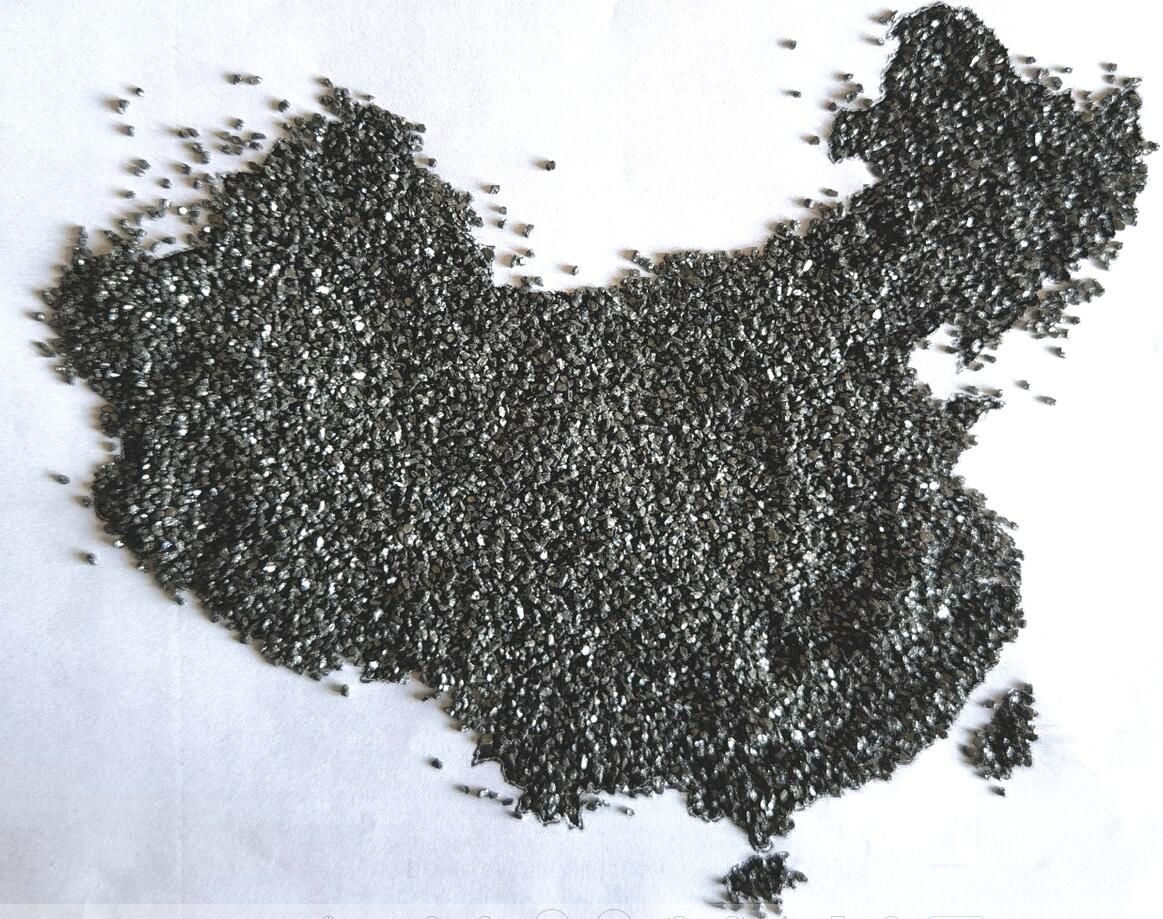
Starting With the Right Raw Materials.
The production of Black Silicon Carbide begins with carefully selected raw materials, typically including a carbon source and a silica-containing material. The quality and consistency of these inputs are important because they provide the basic conditions for forming silicon carbide during the high-temperature process. Raw material selection can influence factors such as: Chemical composition; Reaction efficiency; Impurity levels; Crystal development; Final material consistency; For industrial production, controlling the starting materials is therefore the first step toward producing stable abrasive quality.
High-Temperature Formation.
The raw materials are processed in an electric resistance furnace at extremely high temperatures.
Under these conditions, the silica and carbon react to form silicon carbide crystals.
The furnace environment and production conditions influence the development of the resulting crystal structure.
After the furnace operation is completed, the material is cooled before moving into the next stage.
At this point, the product is not yet the finished abrasive grain used by manufacturers.
It still needs substantial processing.
Crushing and Size Reduction.
The furnace product forms large blocks or masses rather than ready-to-use abrasive particles. These blocks must be crushed into smaller pieces. The crushing process is important because it begins to determine the characteristics of the particles that will eventually become abrasive grains. Different applications require different particle sizes, so controlled crushing is necessary to prepare the material for subsequent classification.
Separation and Purification.
After crushing, the material may contain unwanted metallic or non-metallic components. Further processing can therefore include separation and purification steps. Depending on the product specification, manufacturers may use processes such as: Magnetic separation; Screening; Cleaning; Particle classification; The purpose is to improve material consistency and remove unwanted components as required by the final specification. This stage is particularly important when producing abrasive materials for applications with tighter quality requirements.
Screening Creates Different Grain Sizes.
One of the most recognizable characteristics of an abrasive is its grit size. But a grit designation is not created simply by crushing material until it "looks" like the correct size. The crushed material must be separated into controlled particle-size ranges. Screening and classification help divide the material into different grades. For example, coarse abrasive grains and fine powders require different levels of particle-size control. This is why Black Silicon Carbide manufacturing involves considerably more than the initial furnace reaction.
Fine Powder Requires More Precise Classification.
When the target particle size becomes finer, controlling the distribution becomes increasingly important. Fine material may require additional classification to separate particles according to their size. For manufacturers using fine abrasive powders, uncontrolled particles can affect: Surface finish; Processing behavior; Coating uniformity; Product consistency; Consequently, fine grades should be evaluated according to their actual particle-size requirements rather than simply their product name.
Quality Inspection Before Packaging.
Once the required grain or powder has been processed, quality inspection verifies whether it meets the intended specification. Depending on the product, inspection may involve: Chemical composition; Grit size; Particle distribution; Appearance; Moisture or cleanliness requirements; Batch identification; The inspection stage creates an important connection between manufacturing and purchasing. For buyers, a clearly identified batch and corresponding quality information make it easier to compare incoming material with an approved specification.
From Furnace to Finished Abrasive: The Complete Flow.
The production route can be simplified into the following sequence: Raw Materials-High-Temperature Reaction-Cooling-Crushing-Separation & Purification-Screening-Classification-Quality Inspection-Packaging-Finished Black Silicon Carbide. Each stage contributes to the characteristics of the final product. That is why two materials with similar names can still have different processing histories and different performance characteristics.
Why Manufacturing Process Matters to Buyers.
Understanding production is not only useful for engineers. It can also help purchasing teams ask better questions. Instead of asking only: "What is the price per ton?" A buyer can ask: How is the material processed? How is the grit classified? How is batch consistency controlled? What quality parameters are inspected? Can the same specification be maintained for repeat orders? These questions create a clearer connection between the raw material and the final manufacturing result.
Grain Production vs. Powder Production.
Another important distinction is whether the buyer needs abrasive grain or fine powder.
Abrasive Grain
Usually used where controlled abrasive particles are required for grinding, cutting, blasting, or coated abrasive production.
Fine Powder
Typically requires more detailed particle-size classification and may be used in applications where finer processing or surface characteristics are important. The two products should therefore not be treated simply as different names for the same material. Their processing and quality-control requirements can be different.
What Makes Consistent Production Important?
Industrial manufacturers rarely purchase abrasive materials for only one production batch. Most need repeat supply. This means consistency can be just as important as the initial material specification. A stable production process helps reduce unexpected differences between: One shipment and the next; Trial material and bulk material; Different production batches; For manufacturers using Black Silicon Carbide abrasive grain, this consistency can make process control easier and reduce the need for repeated adjustments.
A Simple Way to Understand Black Silicon Carbide Quality.
Think of the product as having three levels:
Level 1 - Chemical Foundation
The raw materials and furnace reaction establish the chemical foundation.
Level 2 - Physical Processing
Crushing, separation, screening, and classification determine the physical characteristics of the abrasive.
Level 3 - Application Performance
The finished material is then incorporated into a customer's production process, where its actual performance depends on the abrasive formulation and operating conditions. This explains why evaluating abrasive quality requires more than looking at one laboratory number.
Final Takeaway
Black Silicon Carbide is not simply a material that comes out of a furnace. Its final characteristics are shaped by a complete production chain-from raw material selection and high-temperature reaction to crushing, purification, classification, inspection, and packaging. For buyers, understanding this process provides a useful perspective when evaluating different abrasive materials. A reliable purchasing decision starts with knowing what the material is, but becomes much stronger when you also understand how it was produced and controlled. When the production process, specification, and application requirements are properly connected, it becomes easier to achieve stable abrasive performance.
Looking for Consistent Black Silicon Carbide?
Master Abrasive supplies Black Silicon Carbide grains and powders for abrasive manufacturers, distributors, and industrial users. Different grit sizes and application-oriented specifications can be supplied according to production requirements. If you are sourcing material for coated abrasives, grinding tools, refractory products, surface preparation, or other industrial applications, provide your required specification, grit, quantity, and application when requesting a quotation. Contact Master Abrasive to discuss your Black Silicon Carbide requirements and find a suitable specification for your production process.