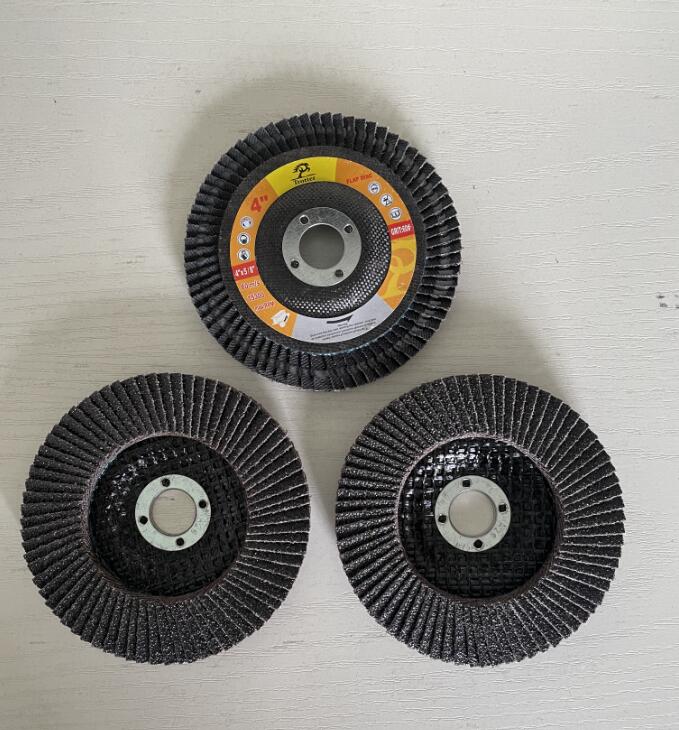
Choosing a fiberglass backing plate is not simply a matter of finding the right diameter at the lowest price. For abrasive tool manufacturers, the backing plate must match the product design, bonding process, working conditions, and target market. The right choice can help improve manufacturing consistency, reduce assembly problems, and support reliable finished-product quality. This guide explains how to select a suitable backing plate for flap discs and other industrial abrasive applications.
Start with the Finished Product, Not Just the Plate.
A backing plate is a structural component that supports abrasive materials during production and use. Its specifications should be determined by the finished tool rather than selected independently. Before requesting a quotation, clarify four points: What abrasive product will the plate be used to manufacture? What diameter, bore size, and profile are required? What bonding process and production equipment will be used? What performance requirements must the finished tool meet? These questions help narrow down the appropriate specification and make supplier quotations easier to compare.
Fiberglass Backing Plates for Flap Disc Production.
Flap discs are one of the major applications for fiberglass backing plates. During manufacturing, abrasive cloth flaps are arranged and bonded to the backing plate to create a grinding and finishing tool. For flap disc manufacturers, fiberglass backing plate selection should focus on dimensional accuracy, structural consistency, surface condition, and compatibility with the bonding process. A plate that does not fit the production design may create assembly difficulties or affect finished-disc balance. Variations between batches can also complicate automated or high-volume manufacturing.
When comparing products, buyers should confirm: Outside diameter and bore dimensions; Plate thickness and structural strength; Surface condition for bonding; Compatibility with the intended flap disc design; Consistency across repeat orders; The best specification is the one that performs reliably in the actual production process, not necessarily the thickest or most expensive option.
Other Applications Beyond Flap Discs.
Although flap discs are a major market, fiberglass backing components may also be used in other abrasive and polishing products, depending on their design and construction.
Abrasive Wheels and Specialty Grinding Tools
Certain specialty abrasive tools use a reinforced backing component to support their structure. In these applications, buyers should verify whether the plate's shape, strength, and bonding surface meet the finished tool's engineering requirements. Do not assume that a plate designed for one wheel type can automatically be used for another. Product geometry and operating conditions must be checked first.
Non-Woven Abrasive Products
Non-woven abrasive products are commonly used for cleaning, deburring, blending, and surface conditioning. Where a particular product design incorporates a fiberglass support plate, compatibility with the non-woven material and adhesive system becomes an important selection factor.
The buyer should confirm the intended construction with the manufacturer before placing a bulk order.
Polishing and Surface-Finishing Tools
Some specialty polishing tools require a supporting base to maintain their shape during assembly and use. For these products, dimensional accuracy, surface quality, and compatibility with the polishing material are key considerations. Because polishing products can have different constructions, confirm the exact application rather than relying on a general-purpose specification. Important: Not every abrasive wheel, non-woven disc, or polishing tool uses a fiberglass backing plate. Always verify the finished product's construction and the supplier's recommended application before purchasing.
Five Factors to Check Before Buying.
Diameter and Bore Size
The outside diameter determines the plate's overall dimensions, while the bore must match the finished product design and mounting arrangement. Even a small dimensional mismatch can cause assembly problems. Provide a drawing or sample if your product requires a non-standard specification.
Thickness and Strength
Thickness alone does not determine quality. Reinforcement structure, material composition, and manufacturing consistency also influence performance. Choose the required strength based on the finished tool's design and validated operating conditions rather than automatically choosing the thickest plate.
Surface Quality
Inspect the plate for visible cracks, deformation, uneven edges, or other defects that could affect assembly. The bonding surface should be suitable for the intended adhesive and manufacturing process.
Batch Consistency
For factories running large production volumes, consistent dimensions and material properties are often more valuable than a small difference in unit price.
Ask whether the supplier can maintain the agreed specification across repeat orders and how product conformity is checked.
Price and Total Purchasing Cost
A low quotation may not represent the best value if the product causes assembly delays, higher rejection rates, or additional inspection work.
Compare equivalent specifications, packaging, minimum order quantities, delivery terms, and quality requirements. This gives purchasing teams a more realistic view of the total cost.
How to Request an Accurate Quotation?
To obtain a useful quotation from a fiberglass backing plate supplier, provide the following information:
| Information Required | Why It Matters |
|---|---|
| Finished product application | Confirms the intended use |
| Plate diameter | Identifies the required size |
| Bore size | Supports dimensional matching |
| Thickness or drawing | Clarifies structural requirements |
| Surface or model type | Helps identify the correct design |
| Order quantity | Supports pricing and production planning |
| Packaging requirements | Helps prevent transport and storage damage |
| Quality requirements | Establishes acceptance criteria |
If you are developing a new abrasive product, sharing a sample or technical drawing can help reduce unnecessary back-and-forth communication.
Choose for Production Reliability, Not Price Alone
The right fiberglass backing plate should fit the finished product, work with the manufacturing process, and maintain consistent quality from batch to batch. For flap disc manufacturers and other abrasive tool producers, careful specification matching can help reduce avoidable production issues and support more dependable product quality. Master Abrasive supplies fiberglass backing plates for flap disc manufacturers, distributors, and other industrial abrasive product buyers. If you are sourcing backing plates for an existing product line or developing a new one, send us your required dimensions, application, estimated order quantity, and technical drawing if available. Contact Master Abrasive today to discuss your requirements and request a specification-matched quotation for your next order.